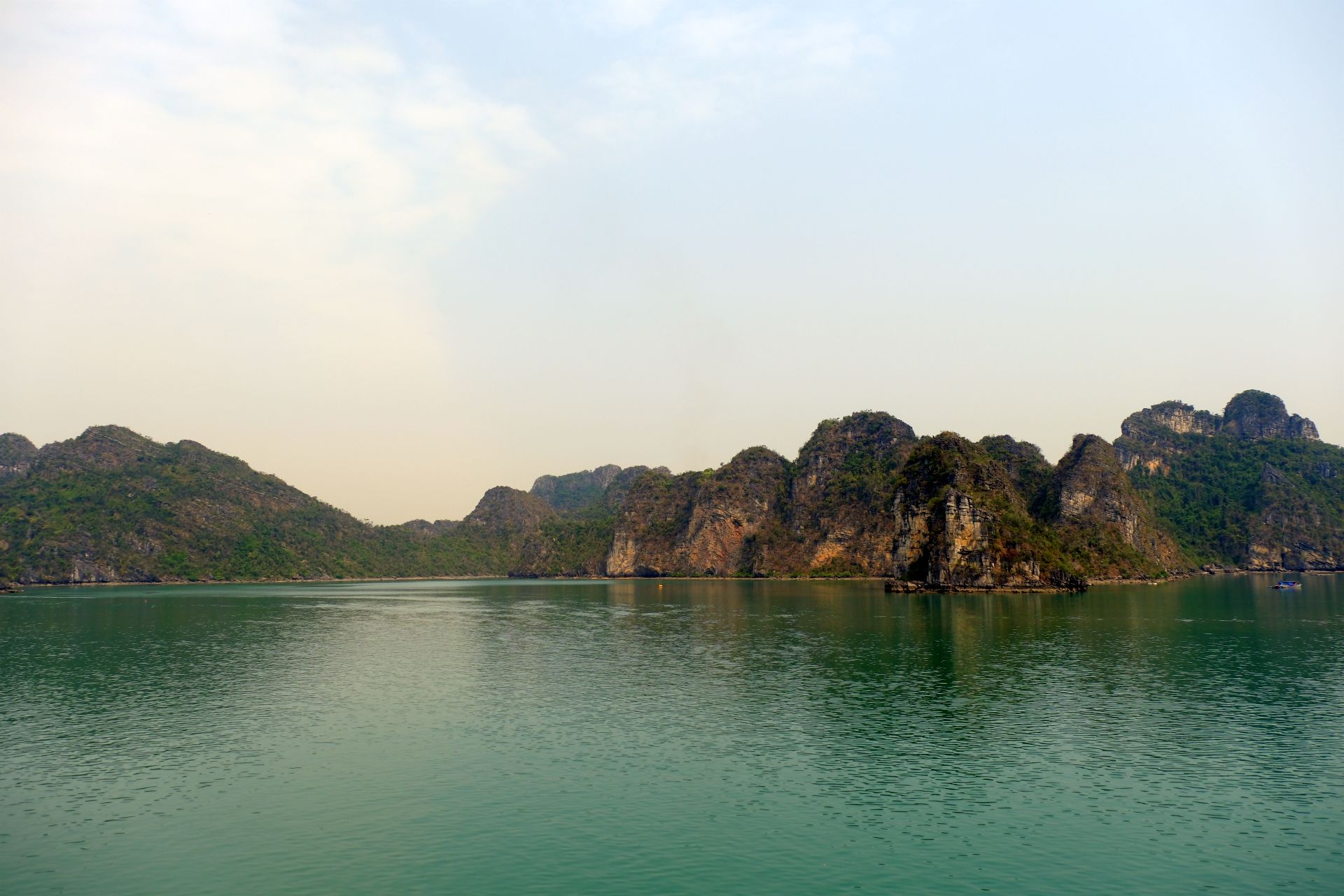
We left Hanoi early that morning, trading traffic and timelines for an overnight cruise on Lan Ha Bay. There was no rush, no tight agenda—just the promise of water, limestone cliffs, and time moving a little slower than usual.
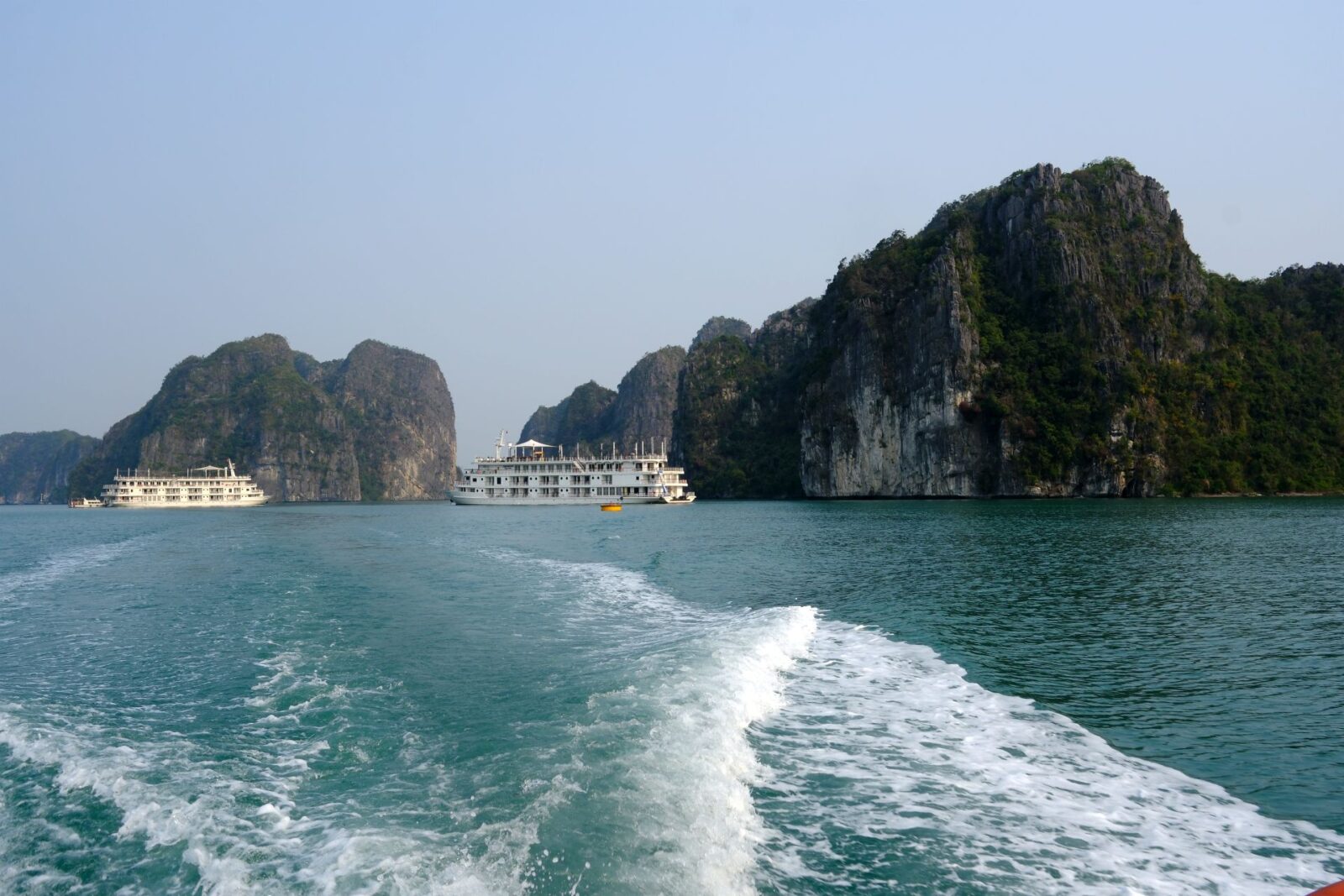
Lan Ha Bay sits just south of the more famous Ha Long Bay, sharing the same dramatic karst landscape but with a noticeably gentler rhythm. Fewer boats, quieter waters, and a sense that nothing here is in a hurry.
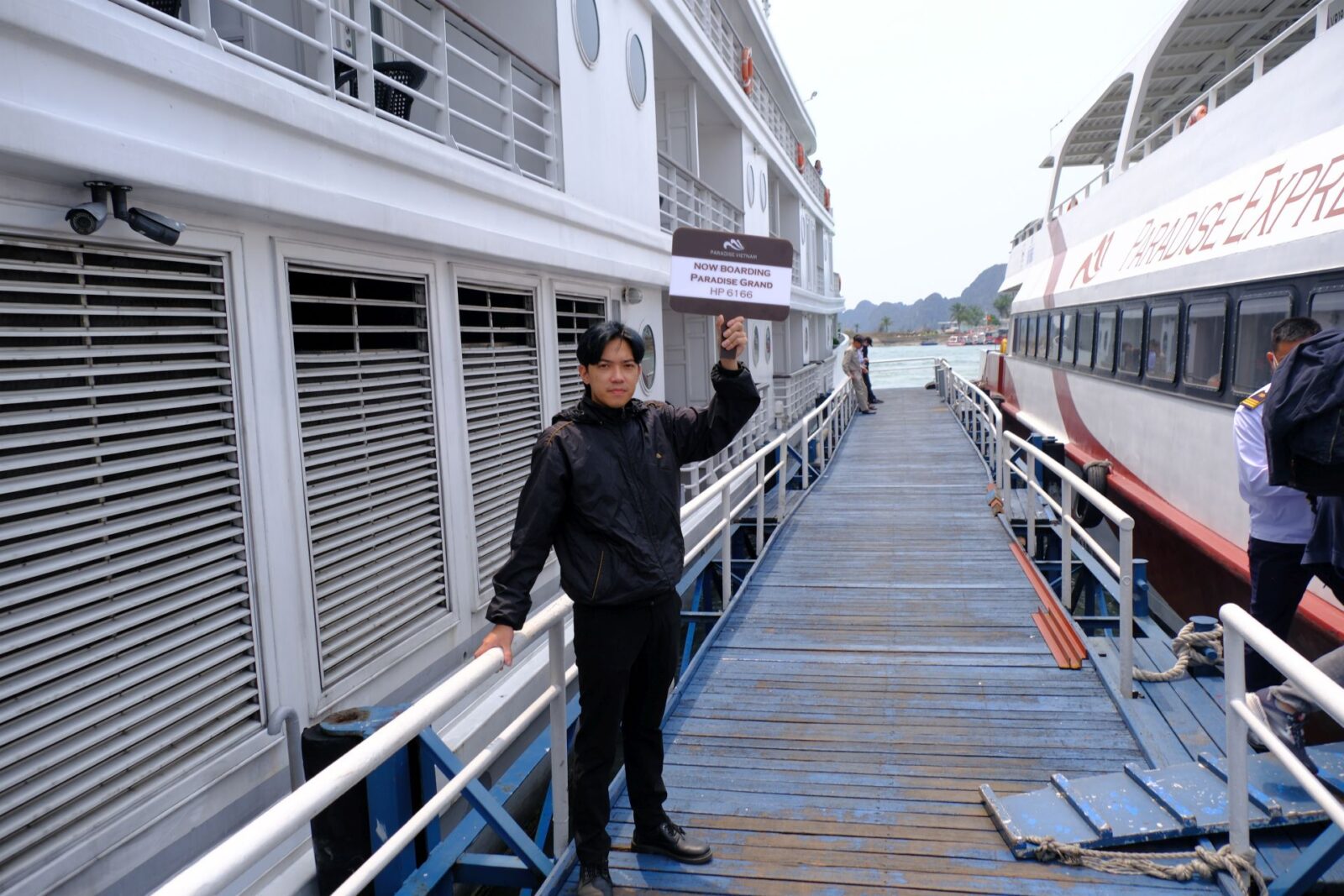
We were sailing on Paradise Grand, and even before the ship came into view, the transition had begun. A speedboat skimmed us across calm water, and soon we were boarding—leaving land, schedules, and expectations behind.
Settling Into the Bay
Lunch was served almost immediately after embarkation, as if to say: you’ve arrived, now sit down. We had mentioned our Indian vegetarian preferences in advance, and the crew went out of their way to take care of us. Dal, rice, soup, salads—simple, comforting food, prepared with attention and warmth.
There was something quietly reassuring about that care. Being far from home, yet not having to explain yourself too much. Comfort without fuss.
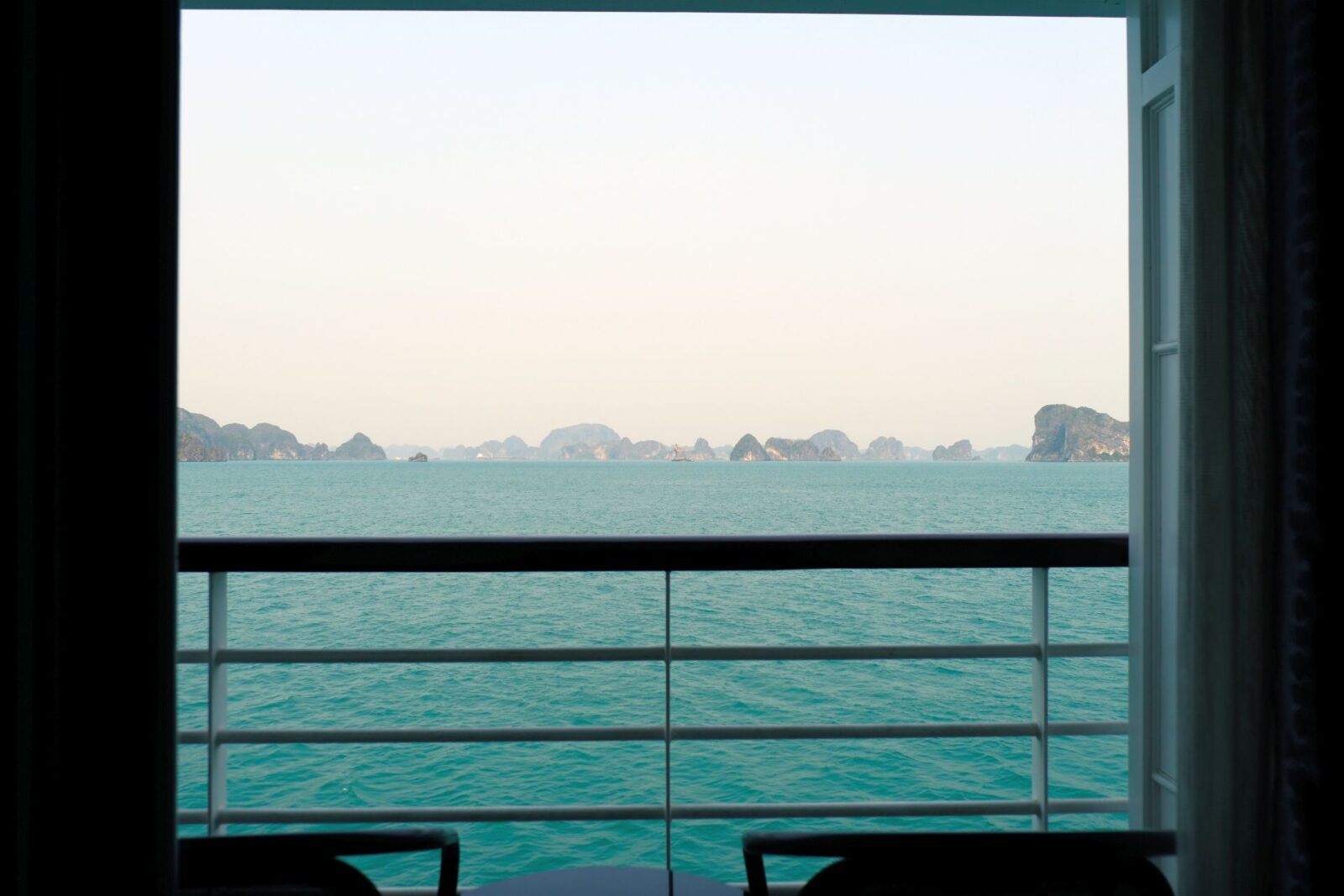
After lunch, we headed to our room—an executive grand balcony cabin on the upper deck, upgraded by our tour operator. The balcony quickly became our favourite place. Sitting there, watching the limestone formations rise straight out of the sea, you realise this part of the journey isn’t about doing. It’s about letting the scenery come to you.
Water, Rock, and Time
Lan Ha Bay has been shaped over millions of years—limestone cliffs carved by wind and water, islands emerging and disappearing with the tides. For centuries, these waters were part of maritime routes that connected coastal villages, fishing communities, and traders moving through the Gulf of Tonkin. Life here has always been tied to the sea.
That connection is still visible today, especially around Cat Ba Island, where forested hills meet floating villages and sheltered coves. We travelled there by speedboat, then continued through the village in an electric cart—quiet, unobtrusive, perfectly in tune with the place.
We wandered past homes, local produce, and glimpses of everyday life. At one stop, we encountered traditional Vietnamese wines, including the infamous snake wine—more cultural curiosity than temptation for us, but interesting all the same.
Evenings on the Upper Deck
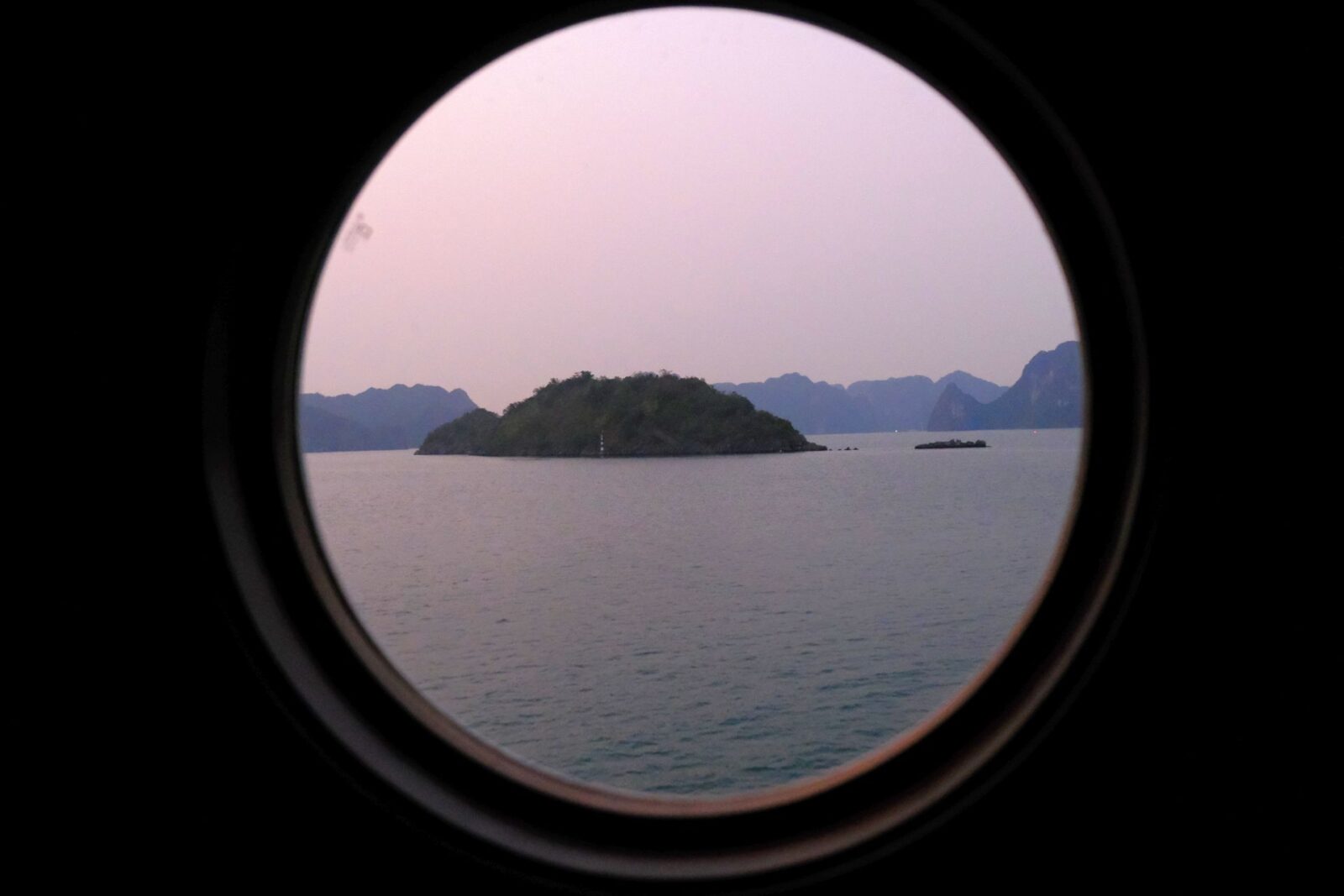
Back on board, the upper deck became our retreat. The light softened as the sun dipped lower, shadows stretching across the karsts, the water turning still and reflective. Boats moved quietly in the distance. No announcements, no noise—just the sound of water against the hull.
This was where Lan Ha Bay really revealed itself. Not dramatic, not loud. Just calm, expansive, and deeply restful.
That evening, we spoke at length with an Australian couple who had just retired. This trip, they told us, was something they had been planning for years. There was a gentle joy in their voices—of finally having the time to do what had been postponed for so long.
I, of course, drifted briefly towards cricket—Steve Waugh once, Pat Cummins now. He smiled politely and said he wasn’t really into it. A small reminder that outside India, not everyone’s emotional universe revolves around the game. We laughed, and the conversation moved on—two very different life stories crossing briefly on a quiet deck in the middle of a bay.
Mornings, Movement, and an Unexpected Gift
We slept deeply that night, lulled by the stillness of the water. The next morning began early, with a Tai Chi session on the upper deck as the bay slowly woke up around us. Mist hovered over the water. Movements were slow, deliberate, unforced—perfectly suited to the setting.
Later, we explored the Dark and Bright caves in small bamboo boats, gliding through narrow passages surrounded by towering cliffs. Quiet corners, enclosed spaces, still water—it felt almost meditative.
And then, without expectation or warning, came one of the most special moments of the trip.
A small troop of Cat Ba langur appeared briefly along the cliffs. Fewer than a hundred remain in the wild, found only on this island. It wasn’t announced. There was no build-up. Just a fleeting, humbling sighting—nature offering something rare, without spectacle.
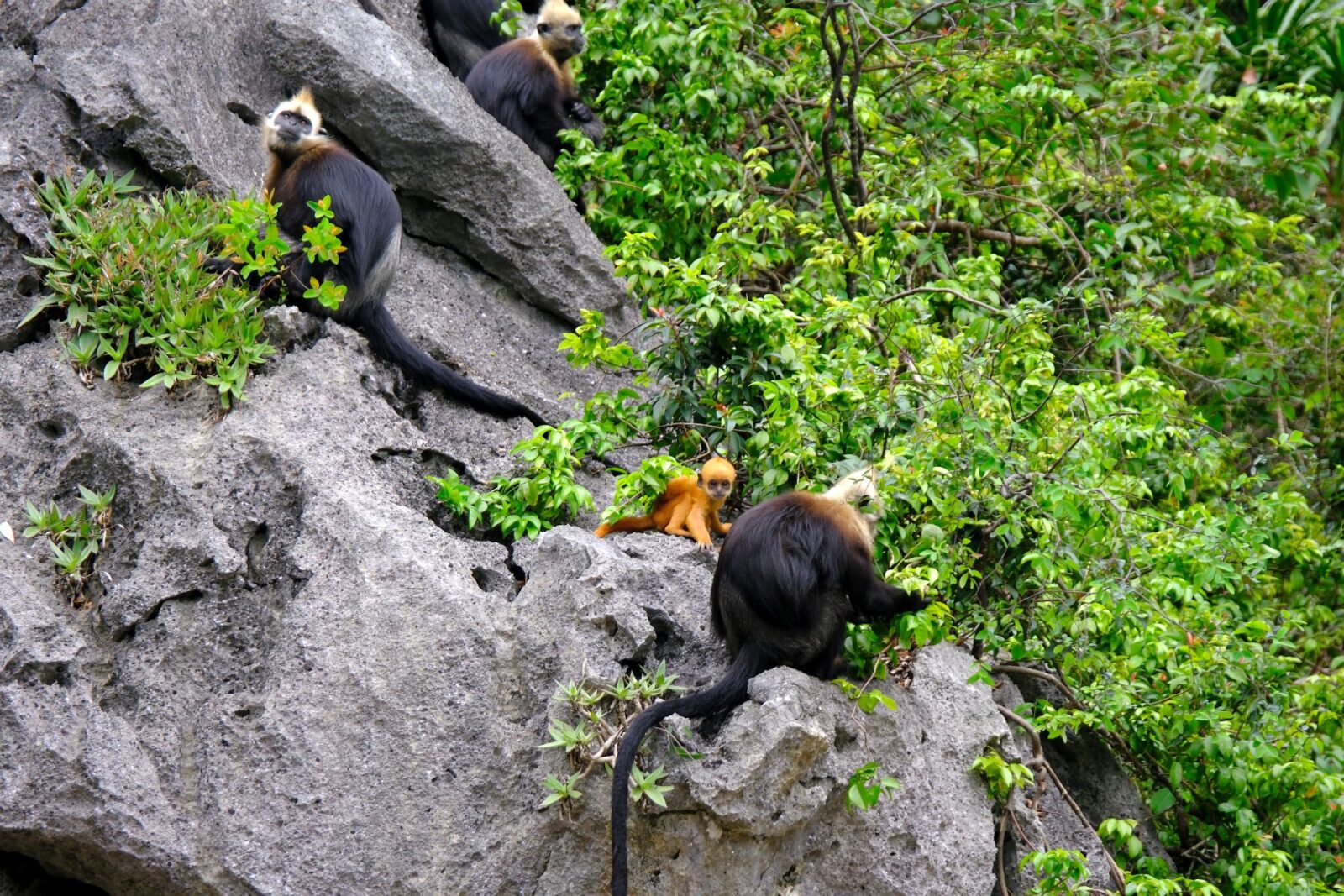
It didn’t define the trip, but it stayed with us.
We had mentioned our Indian vegetarian preferences in advance, and the crew went out of their way to take care of us. Dal, rice, soup, salads—simple, comforting food, prepared with attention and warmth. Being far from home, yet not having to explain yourself too much. Comfort without fuss.
Later, the chef was introduced to us. He told us he genuinely enjoyed Indian food and liked experimenting with it from time to time. We told him how much we had enjoyed the meals, and my wife—inevitably—offered a couple of small tips for that authentic Indian touch. He listened with interest, smiling, clearly pleased by the exchange.
It was a small moment, but a meaningful one. Not just hospitality, but conversation—two food cultures meeting with curiosity and goodwill.
Leaving, Slowly
Back on board, bags were packed reluctantly. Breakfast followed—once again thoughtfully adapted for us, and a chance to thank the Vietnamese chef who had taken such care with our meals.
Did Lan Ha Bay live up to the hype? Absolutely. But not because it dazzled. It worked because it allowed us to slow down, to rest, to notice—water, light, people, small moments.
Some journeys energise you. Some teach you something.
Lan Ha Bay gently reminded us that stillness, too, is a form of travel.
And yes—if given the chance, we would do it all over again.
Leave a Reply