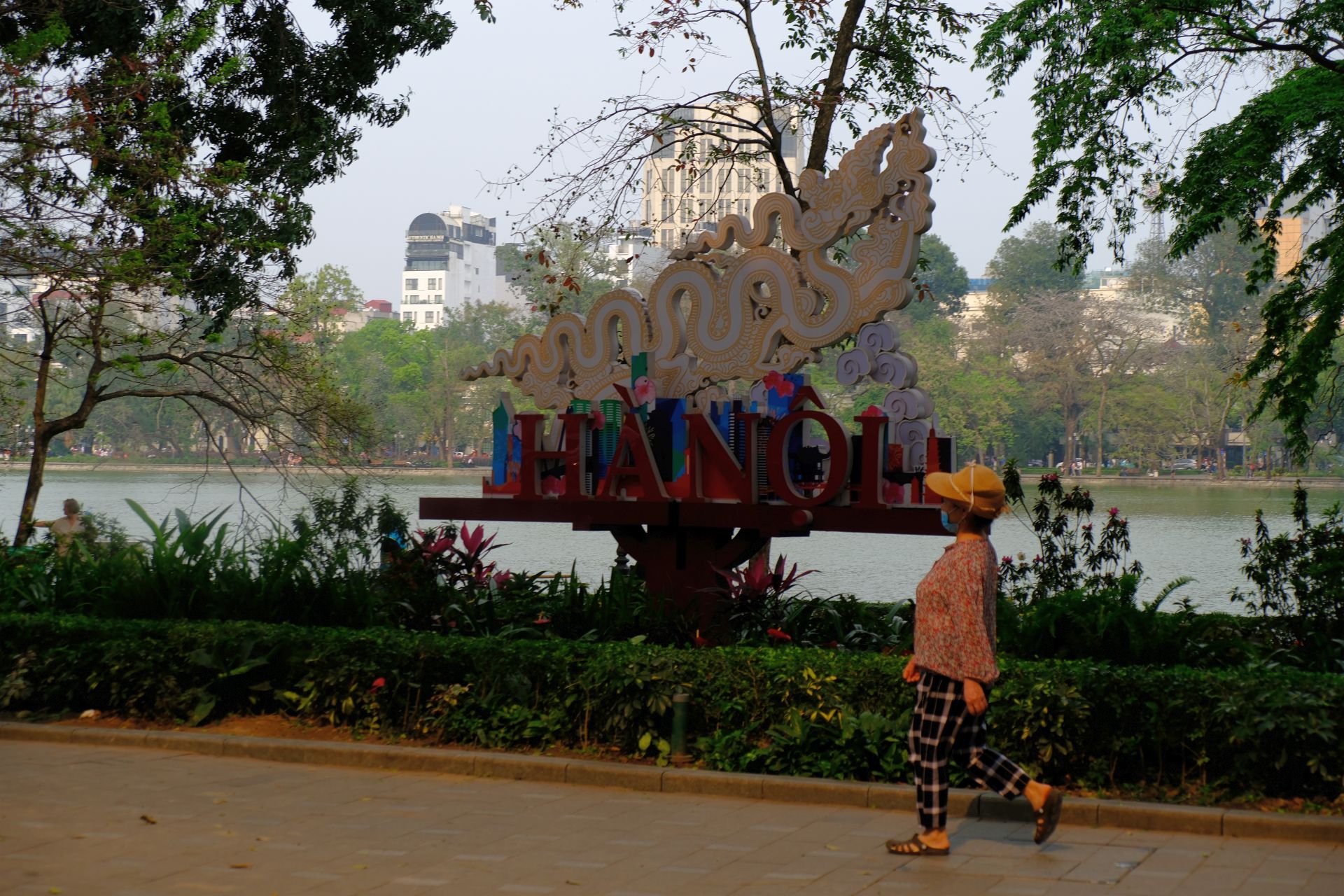
Hanoi was meant to be a full stop.
Instead, it became a pause—uneven, disrupted, human.
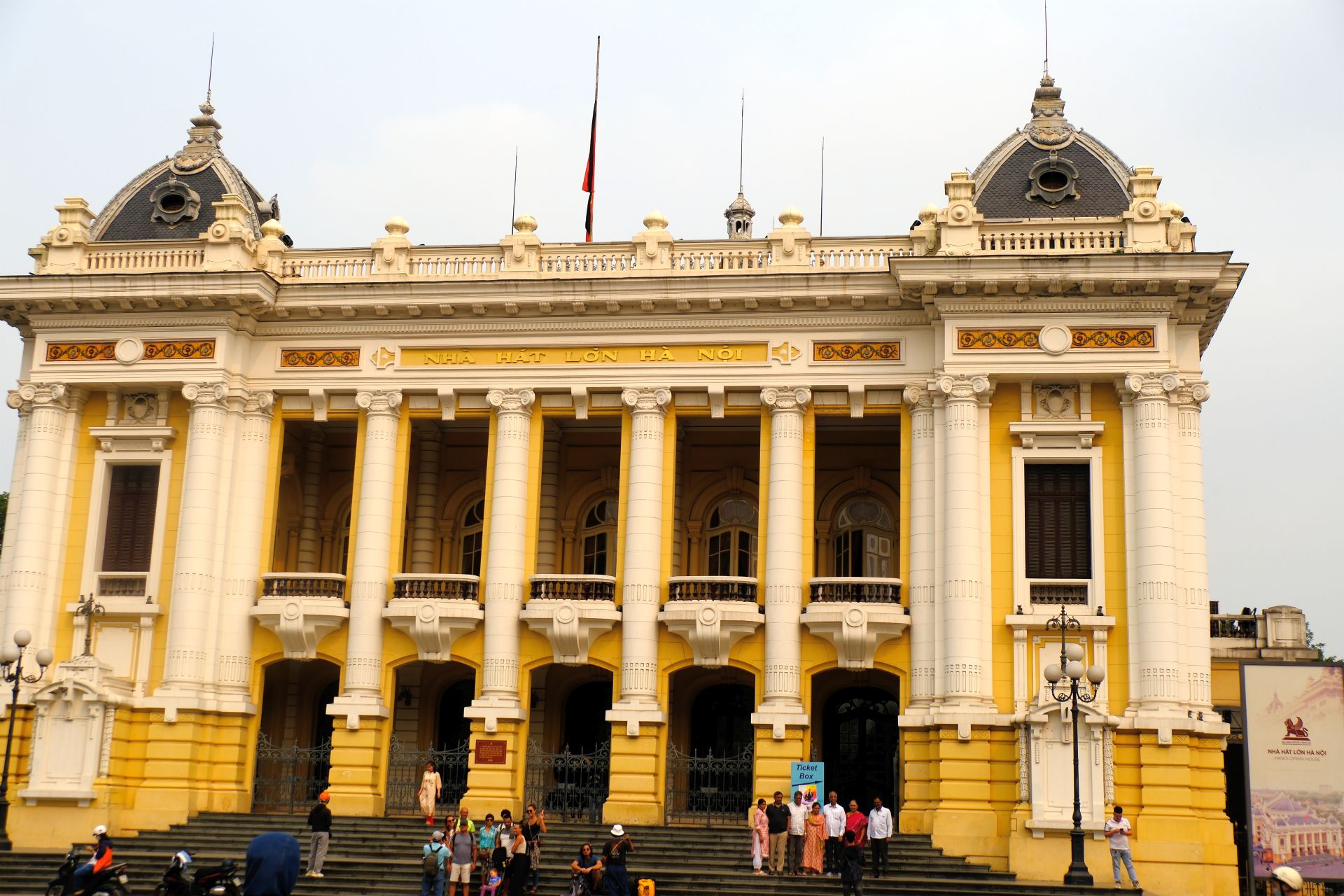
We arrived carrying plans that looked neat on paper: walking tours, French-era boulevards, Train Street, a water puppet show, long evenings out. What we got instead was something less predictable, shaped as much by circumstance and weather as by choice.
And in hindsight, that felt oddly appropriate for a city like Hanoi.
An Unexpected Beginning: The Incense Village
One addition to the itinerary came almost as an afterthought—an incense-making village on the outskirts of the city. It turned out to be the most absorbing part of the day.
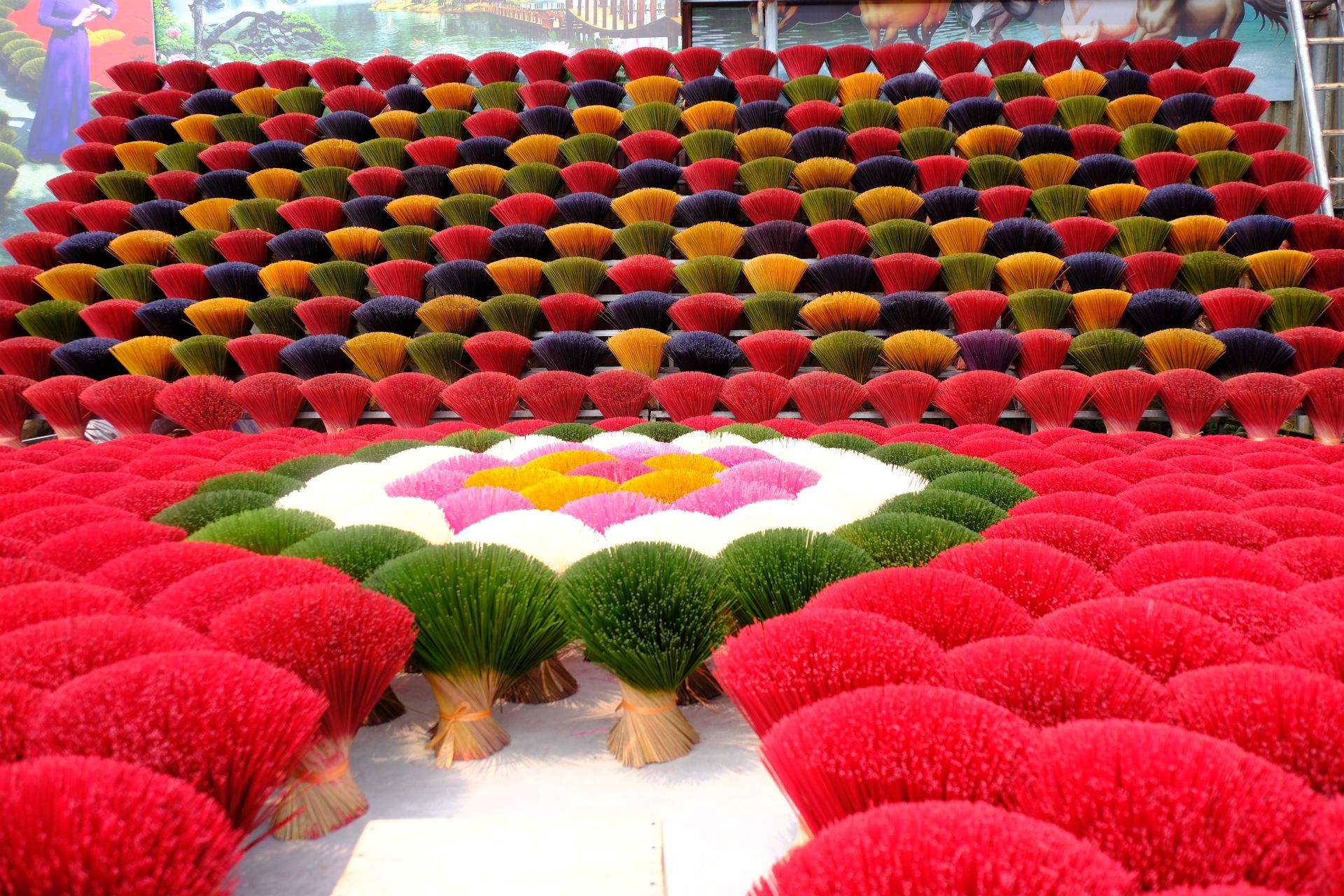
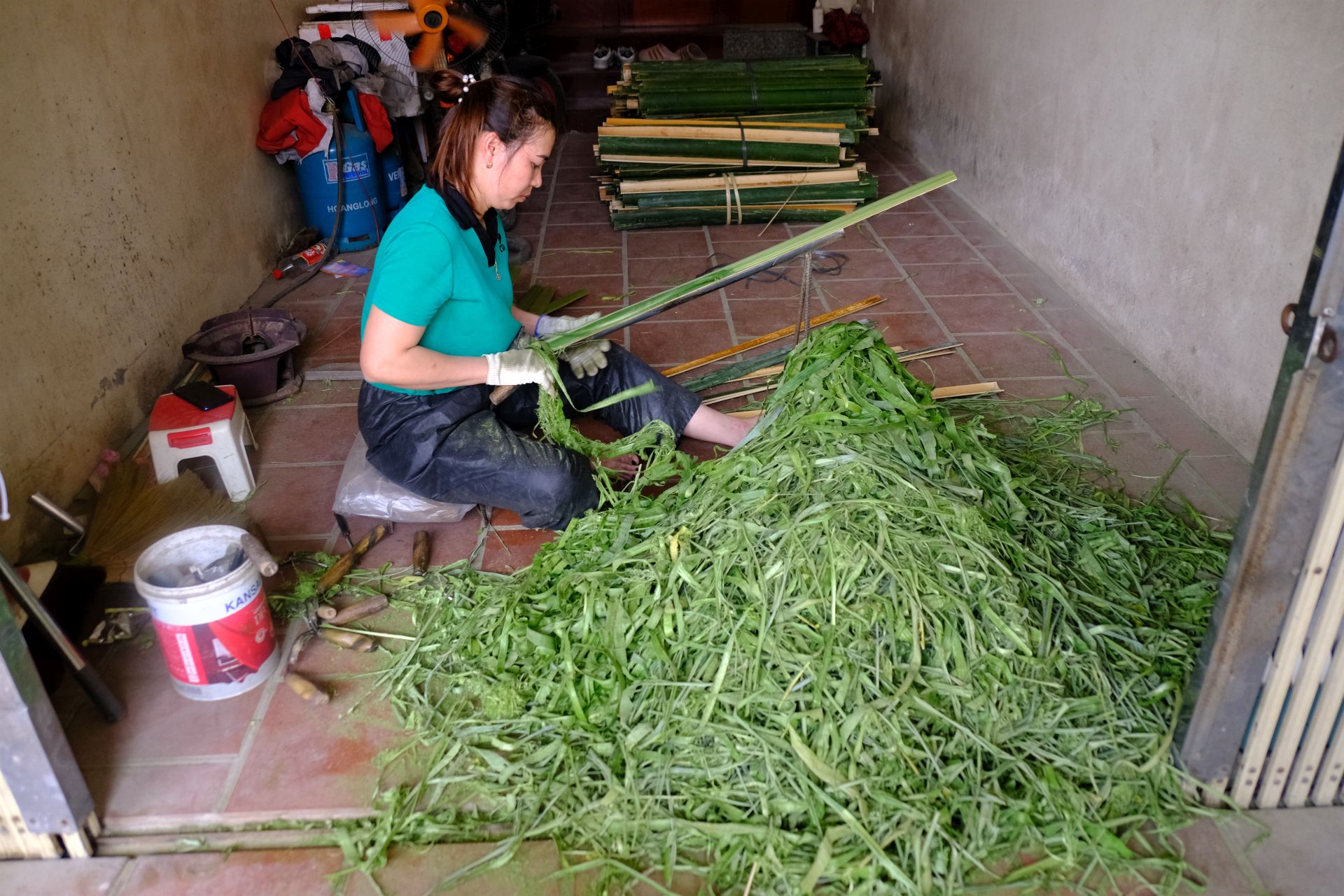
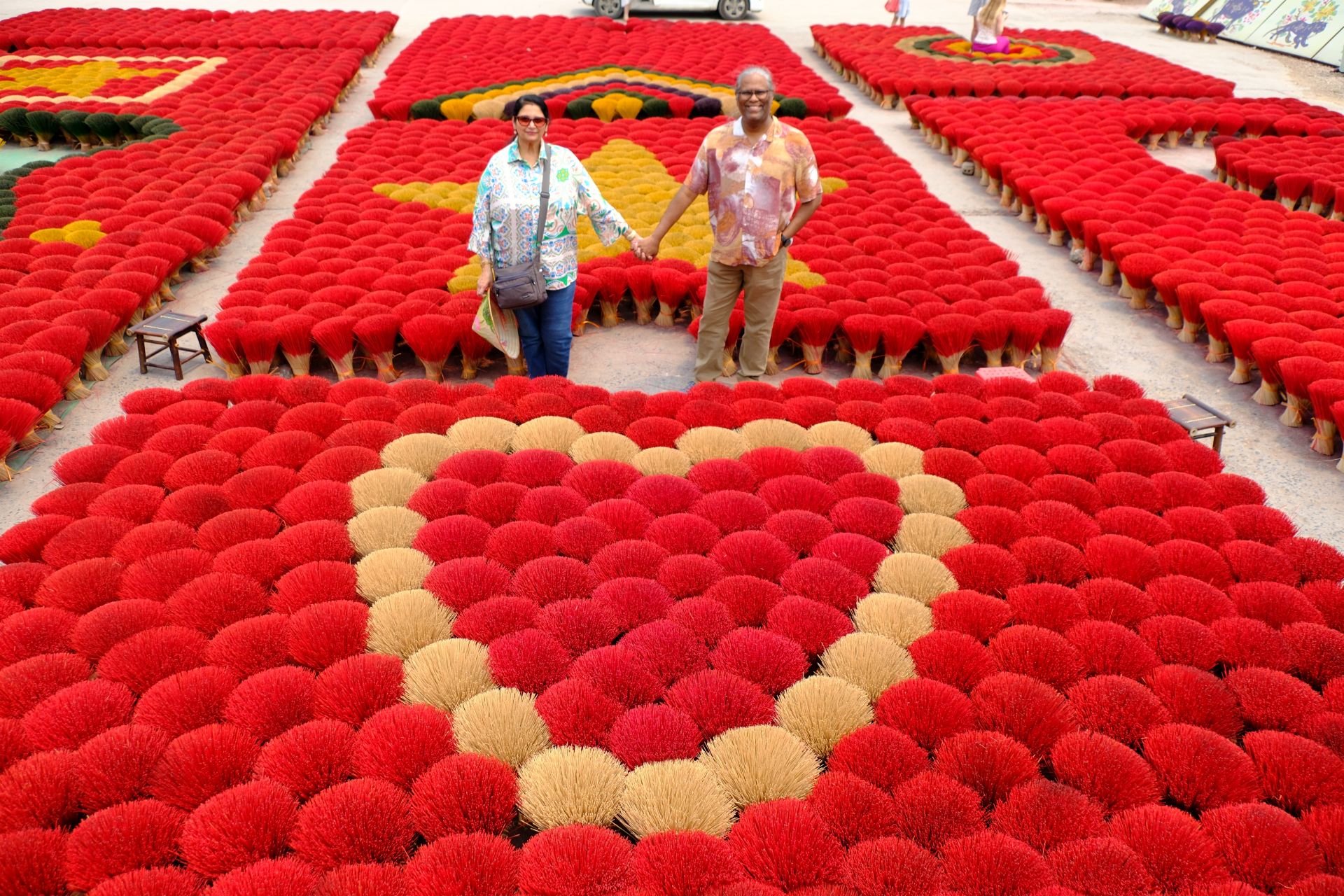
The village of Quang Phu Cau functioned like a quiet ecosystem. Each stage of the incense-making process was handled by different families: bamboo brought in and sorted, sticks cut and sized, fragrant herbal paste prepared, incense rolled by hand, dyed, and finally laid out in radiant circular fans to dry. What we often encounter as a small ritual object—lit absent-mindedly during prayer—revealed itself here as the result of collective, patient labour.
It felt familiar in a way that was difficult to explain. In India, incense is woven deeply into daily life, temples, and homes. Seeing a Vietnamese village organised entirely around the same sacred object created a quiet sense of continuity—different geography, similar rhythms.
The place was touristy, yes, but not overwhelmed. We were able to walk around at ease, watch the work, ask questions, and simply observe. It was a gentle start, and an unexpectedly grounding one.
What Didn’t Happen
Much of what followed was defined by absence.
The water puppet show was cancelled due to official closures following the death of a dignitary in neighbouring Cambodia. Train Street, another much-anticipated stop, was closed again by the authorities. We respected the restrictions and did not attempt to bypass them. That disappointment, though, was felt more keenly by P. She had been quietly looking forward to Train Street—planning to take videos, imagining showing them to her colleagues back at school. When I had first mentioned it during our planning, her reaction had been instant: “Train Street? I’d love to go there.”
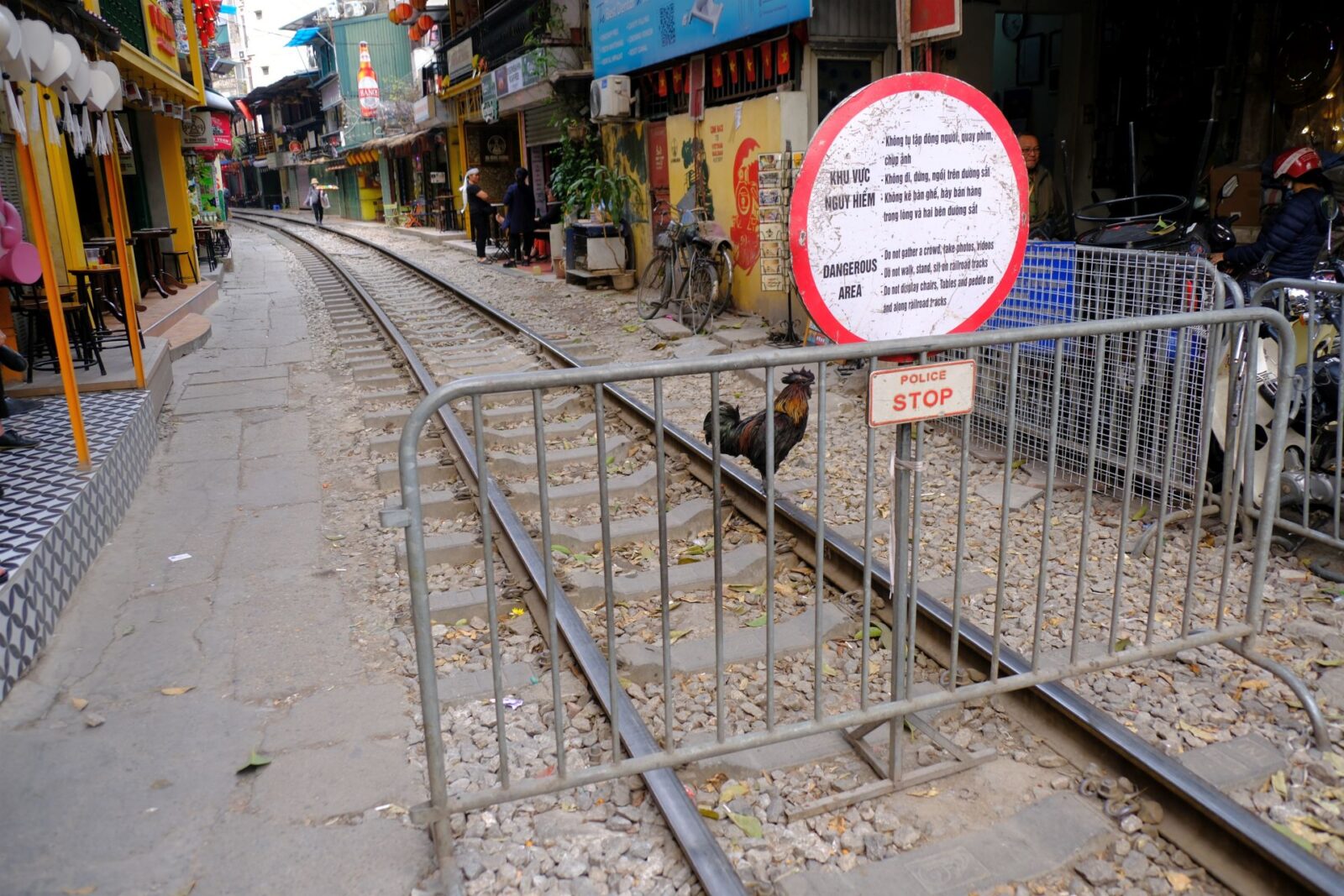
To see that particular excitement dissolve was harder than missing the sight itself. We respected the restrictions and did not attempt to bypass them, but the sense of something anticipated and then withheld lingered.
Finding a Different Pace
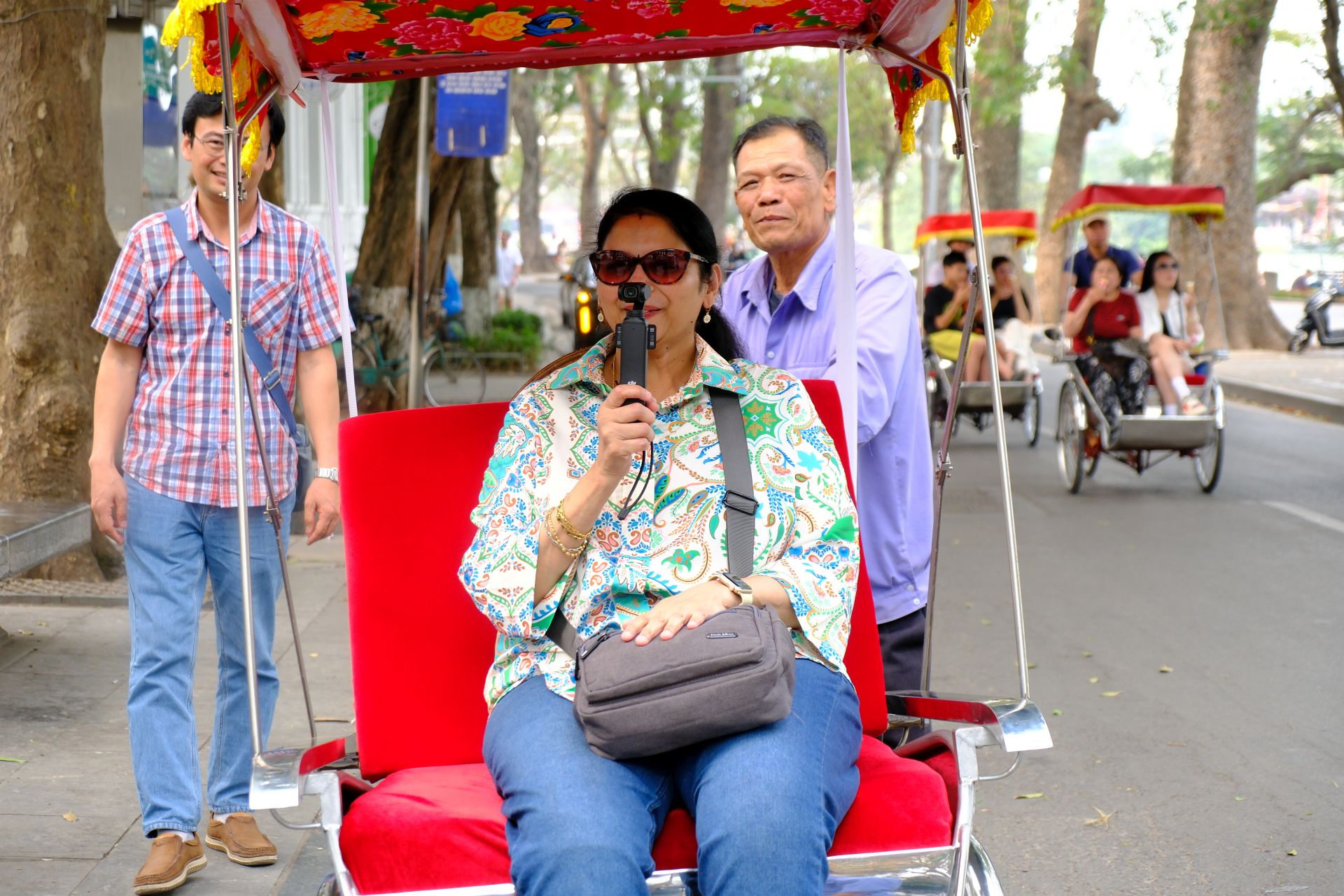
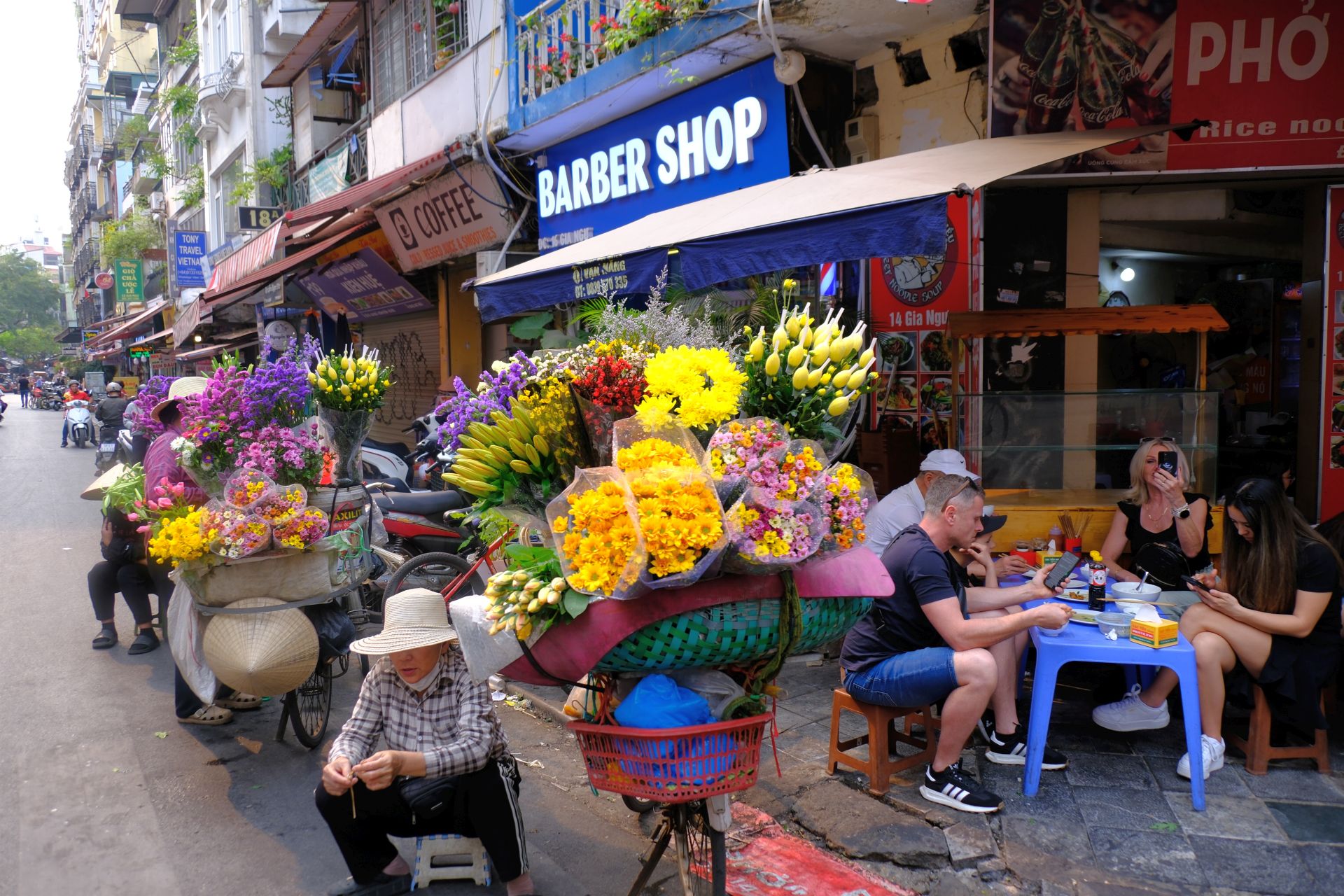
With walking no longer appealing, we opted for a cyclo ride through the Old Quarter. In retrospect, it was the right decision. From the seat of the cyclo, the city revealed itself without demanding too much—street life unfolding, shops opening and closing, rain-softened movement all around.
Our hotel choice, however, worked against us. We had booked a place in the Old Quarter, assuming something of a Hoi An-like experience—walkable, atmospheric, inviting. Hanoi, old quarter or not, is still a large, living city. The room felt cramped, and by evening, both of us were unwell. Dinner was brief, familiar, and comforting—Indian food once again—followed by medicines and what must be the earliest night I can remember. We were asleep by six in the evening.
Rain, Relief, and a Second Chance
One quiet blessing throughout this stretch of the trip was the weather.
April marks the beginning of the hotter, drier season in northern Vietnam. Yet this year, rain accompanied us almost constantly—not sporadic showers, but steady, persistent rain. Instead of being an inconvenience, it kept temperatures down and softened the days. Except for the first day, when we were caught out, the following days were remarkably pleasant.
That rain helped us recover.
The next morning, we woke feeling better. Not fully restored, but capable. With a flexible plan and no pressure to push ourselves, we set out again.
A Gentler Hanoi
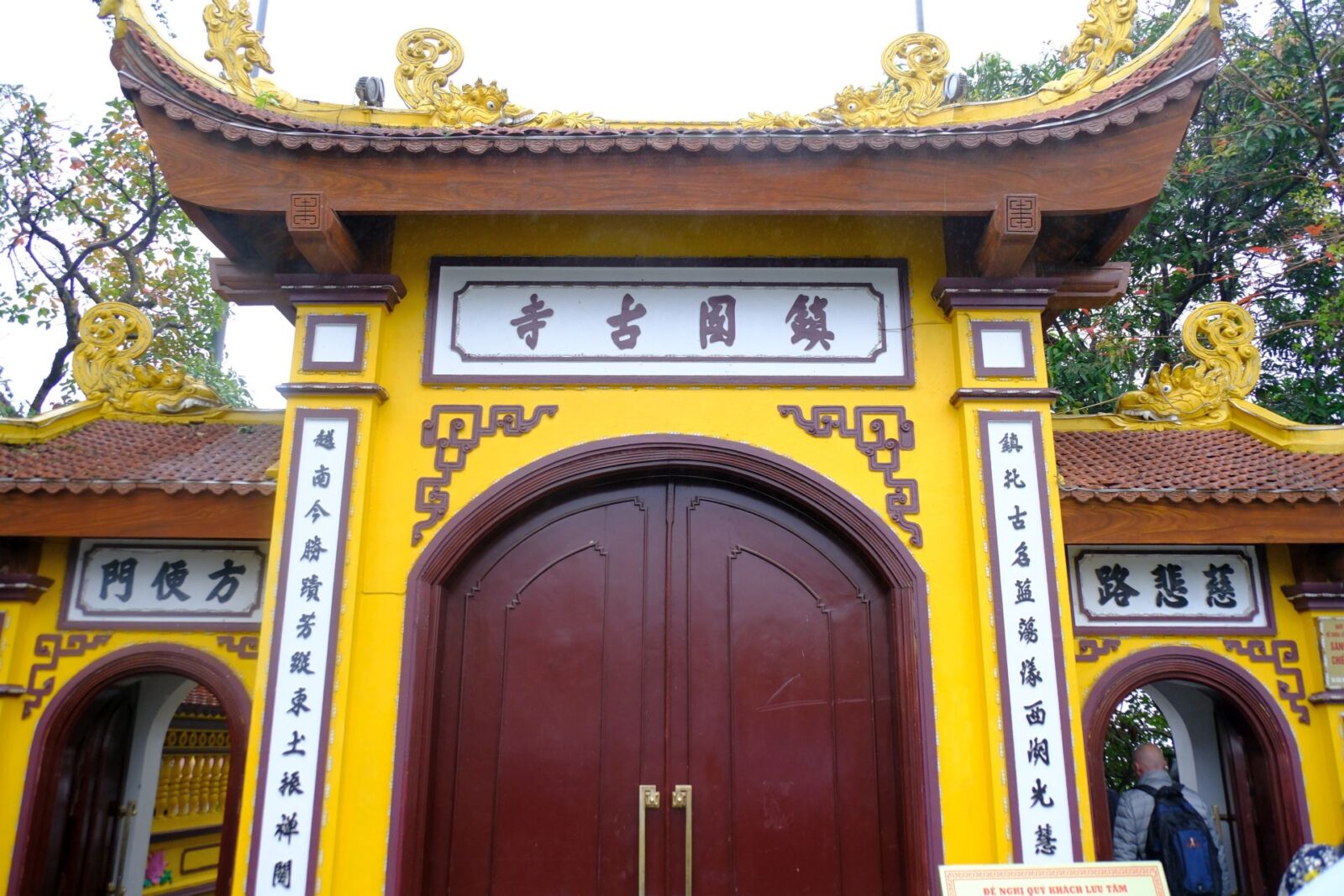
We began our tpour at the Trấn Quốc Pagoda, set quietly by West Lake. The red-brick stupa rose cleanly against the grey sky, reflected faintly in the water. It was not a long visit, but it didn’t need to be. It felt like a pause within a pause.
From there, we moved on to the Thăng Long Imperial Citadel, once the political heart of Vietnam. The site felt layered rather than overwhelming—history spread out across time rather than concentrated into spectacle.
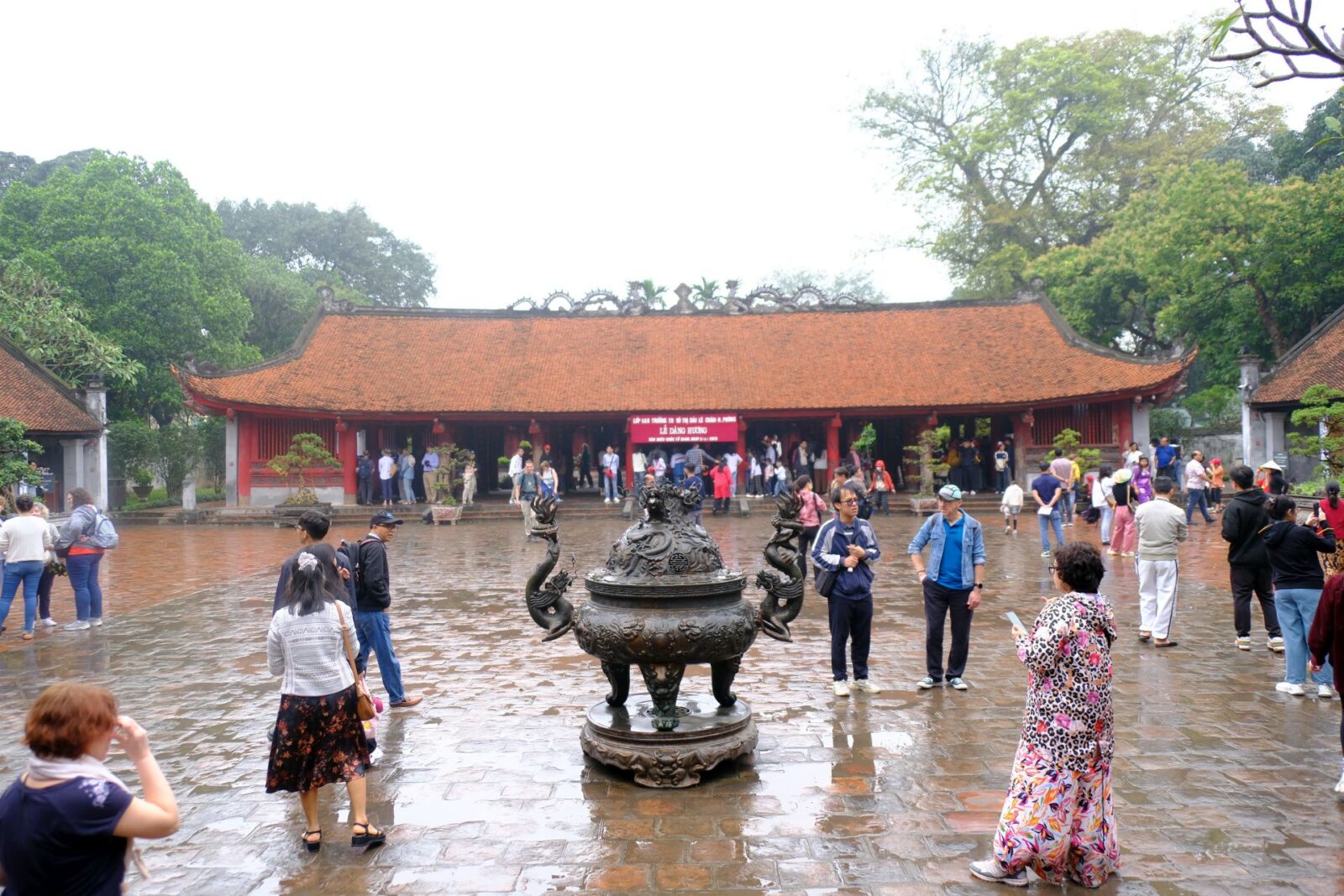
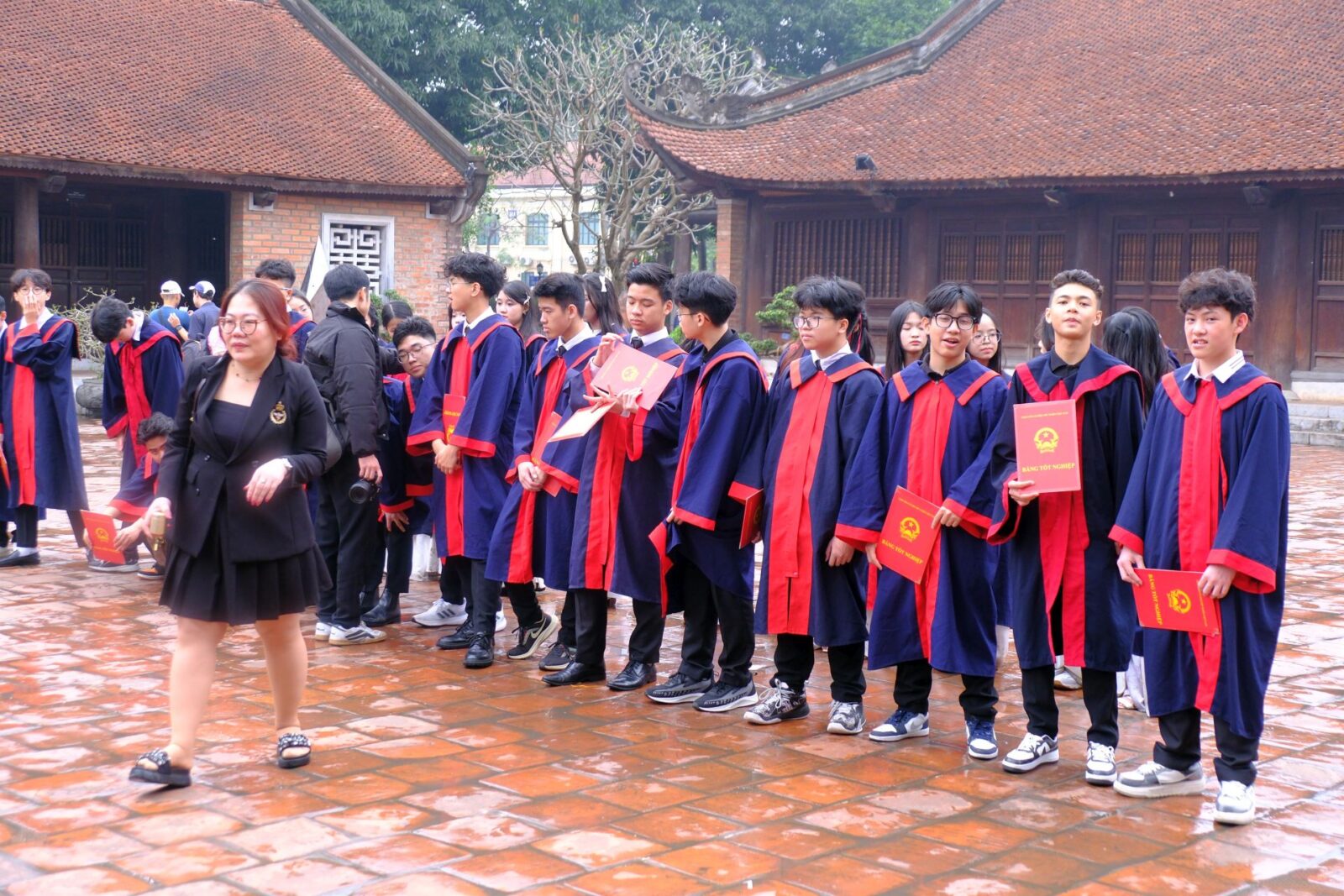
Our final stop was Temple of Literature, Vietnam’s first national university. The rain-slicked courtyards, the large bronze incense burner, the slow movement of visitors—it all suited our mood. There was something calming about the place, scholarly and restrained, asking for observation rather than awe.
Lunch was again at the same Indian restaurant—familiar now, almost routine. We returned to the hotel, rested properly this time, and slept in preparation for our night flight.
Leaving
In the evening, traffic delayed our driver by half an hour. Enough to cause anxiety—especially for my wife, already thinking of alternatives. I stayed calm, trusting that we had built enough buffer into the plan.
We did.
The drive eventually came, the airport followed, and with it, the end of our week in Vietnam.
Hanoi did not give us everything we expected.
But it gave us what was possible—moments of culture, frustration, recovery, rain, and quiet acceptance.
And perhaps that was the most honest way to end the journey.
Leave a Reply