We left Amman early and drove north, towards Jerash. It felt right to begin the day outside the city — to encounter Jordan first through absence rather than accumulation.
Breakfasts in Amman were unhurried and generous. A typical mezze spread appeared without ceremony — bread, labneh, olives — and it was here that we discovered how naturally za’atar and olive oil belong together. Herbs are abundant in Jordan, and that carried through to tea as well. Over the next day, we found ourselves drinking infusions flavoured with thyme, rosemary, and mixed local herbs — small variations that quietly marked where we were.
Jerash, the ancient Gerasa, lies in gently rolling terrain, greener than one expects, its scale revealing itself gradually. Often described as one of the best-preserved Roman cities outside Italy, it doesn’t rely on superlatives once you’re inside. The site is expansive but readable. You don’t need to be told where the city once gathered or moved; the logic of it remains intact.
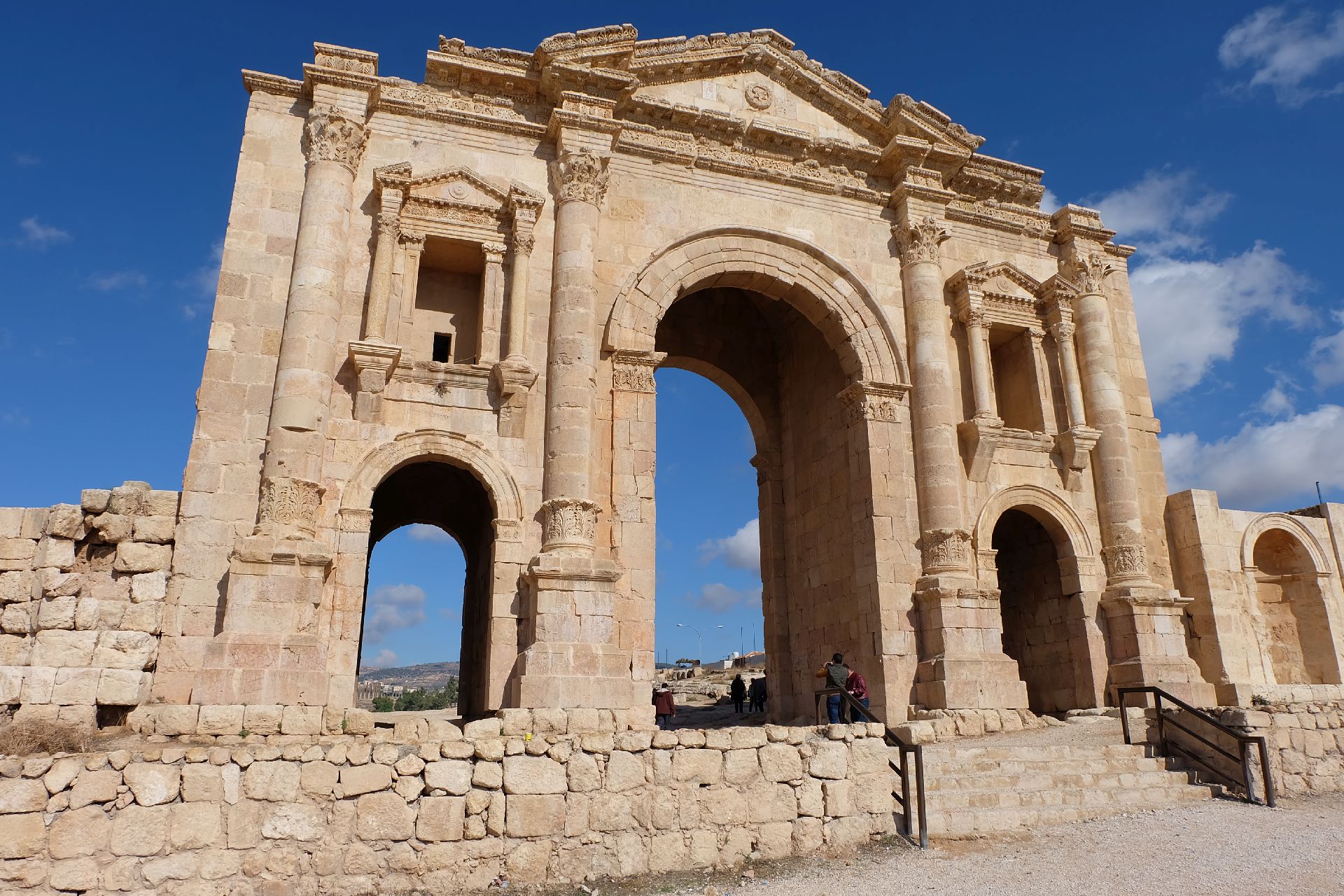
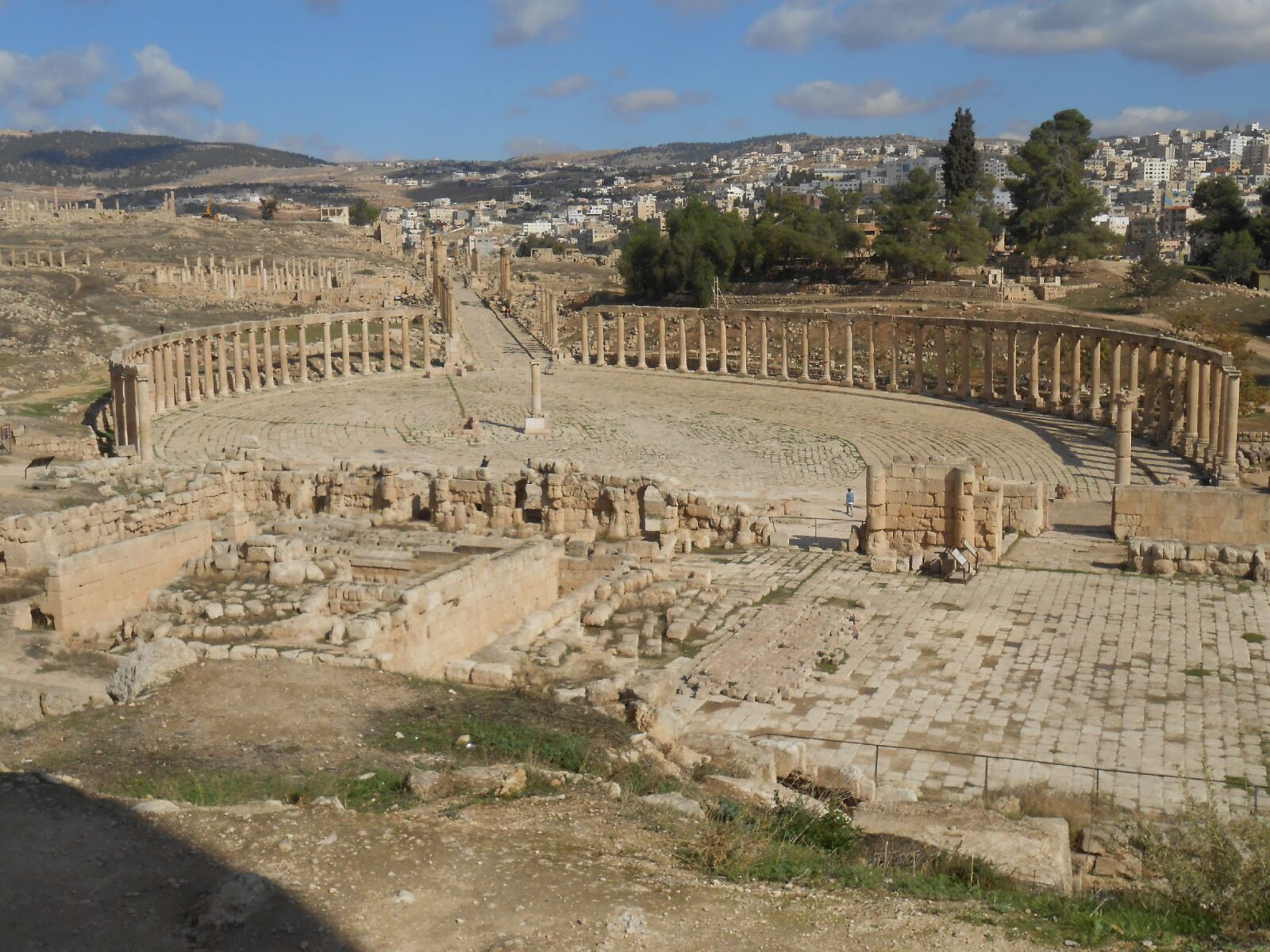
We entered through Hadrian’s Arch, built to commemorate a visit that lasted only days, and walked onwards into a city that functioned for centuries. The Oval Plaza, improbably shaped and perfectly positioned, connected movement to monument. From there, the long stretch of the Cardo Maximus unfolded, its paving stones still bearing the grooves of chariot wheels. Water channels ran beneath it, markets and workshops flanked it, life once organised along this spine.
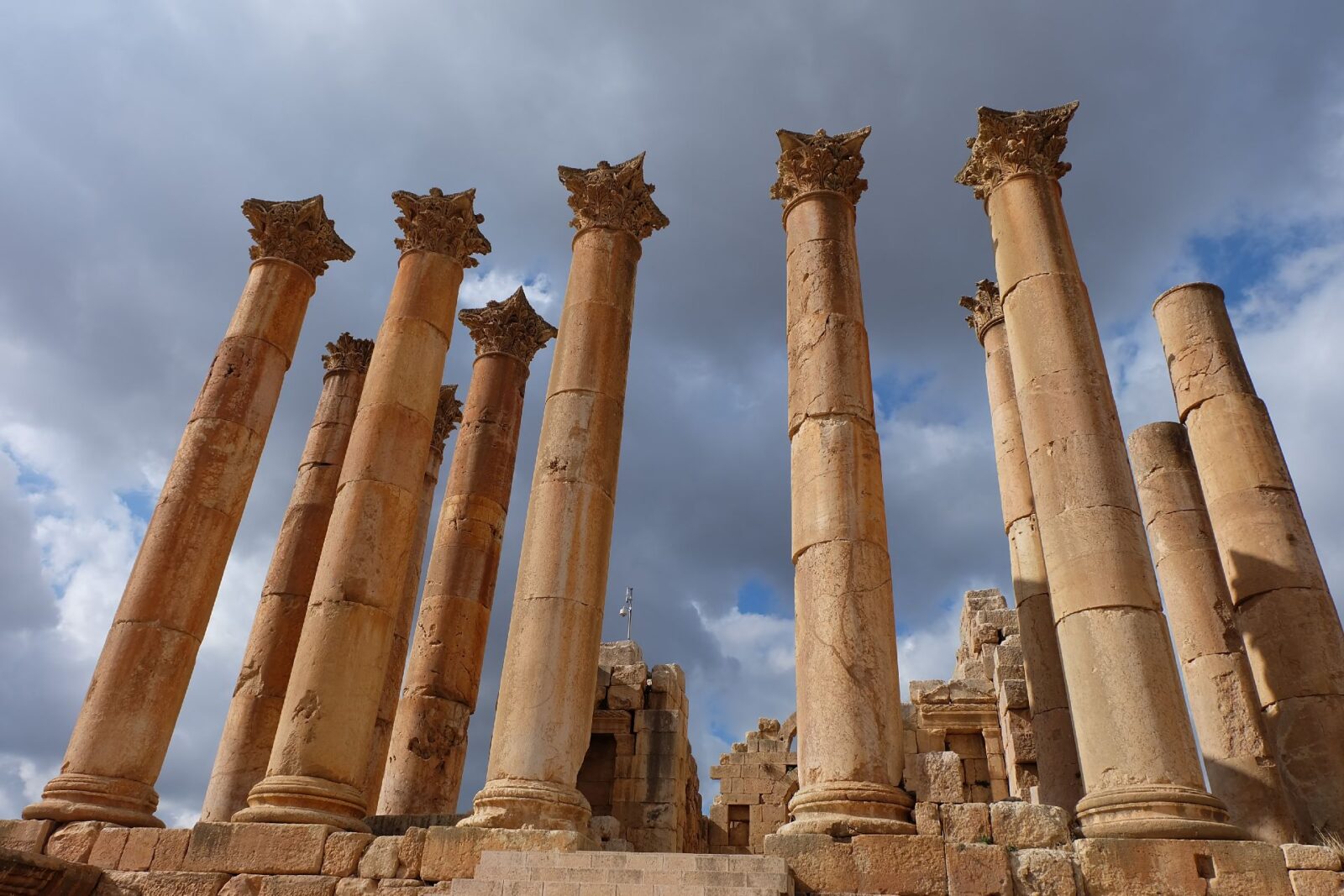
What stayed with us was not any single structure, but the completeness of the urban fabric. Temples, theatres, baths, oil presses, side streets — grandeur and routine coexisted without hierarchy. Even the monumental Temple of Artemis, with its towering Corinthian columns engineered to flex during earthquakes, felt grounded in the city rather than elevated above it.
By the time we reached the far end of the site, the walking had slowed us, but not dulled attention. Jerash absorbed time easily. It rewarded lingering.
In the afternoon, we drove back south to Amman, arriving with Jerash still present in our bodies — legs tired, scale recalibrated. The city announced itself immediately, not through monuments but through movement.
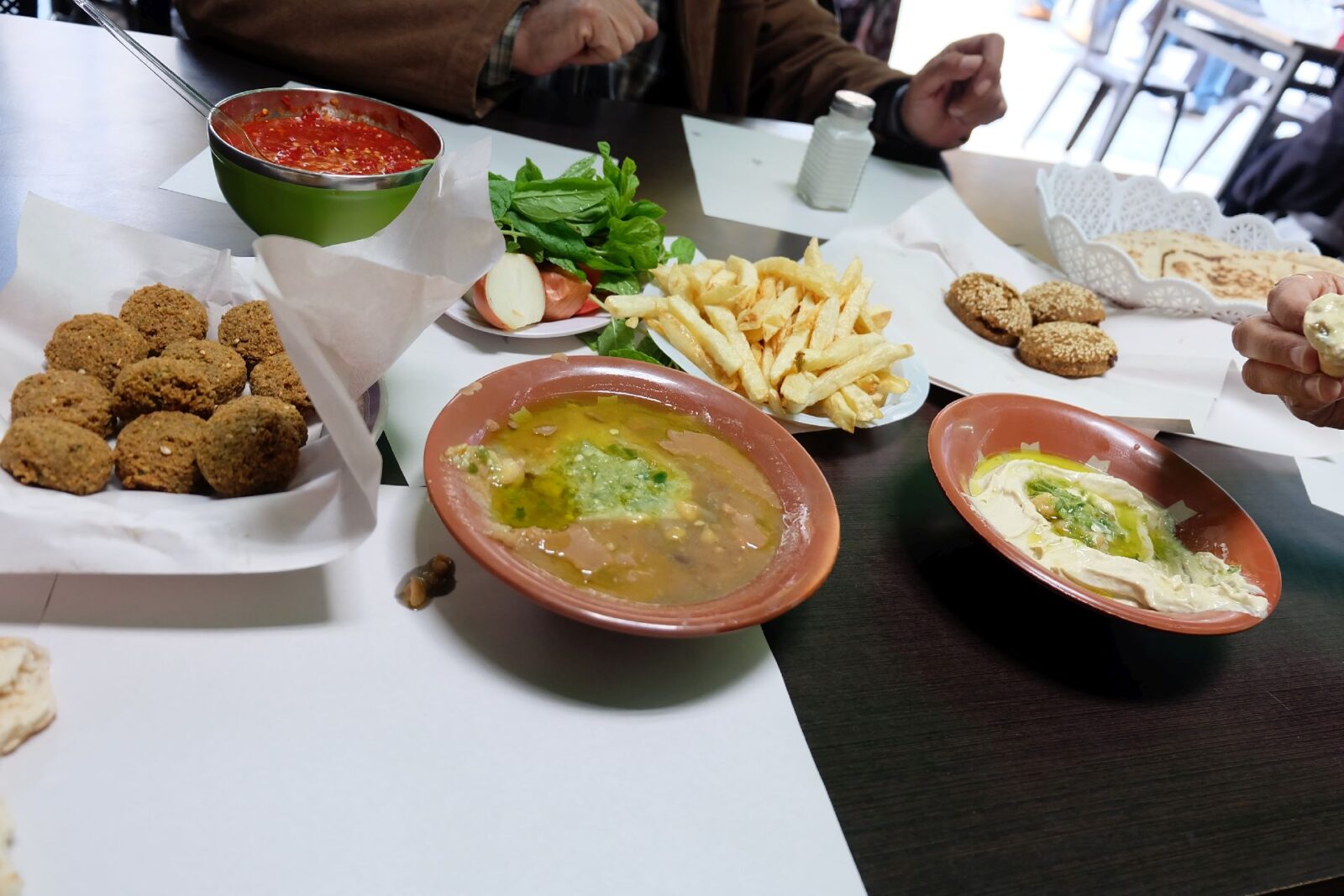
For lunch, our guide took us to Hashem Restaurant, a place that felt resolutely uninterested in reputation. Falafel arrived quickly, eaten standing, without ceremony. It turned out to be the right place for a first encounter. P tried falafel here for the first time and immediately understood why it inspires loyalty. The mezze was simple, generous, and better than most we had later. Cheap, crowded, open at improbable hours — the kind of place you either trust or avoid entirely.
Kunafah followed later, syrup-soaked and unapologetic. We were taken to Habibah Sweets, a downtown institution, and introduced to it properly thanks to our driver, Mansoor David. It felt less like dessert and more like a rite of passage.
Downtown, the Roman Theatre of Amman opens directly onto the street, ancient stone surrounded by traffic and daily life. Built into a hillside, it blends almost too well with the city around it. Children climb its steps, vendors linger nearby, and the acoustics still do their quiet work. Restored, imperfectly perhaps, but alive.
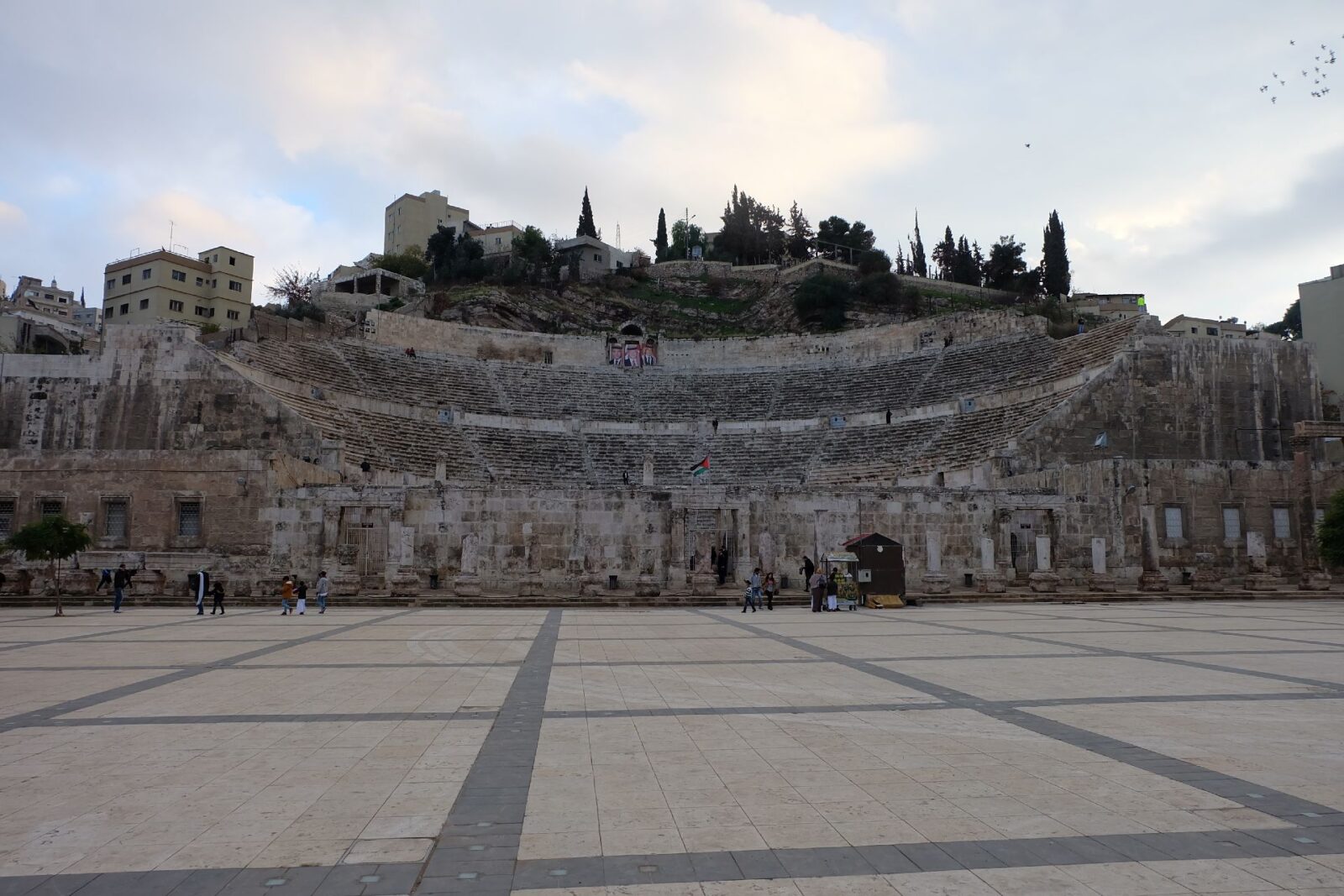
From there, we walked without direction — through streets dense with shops, spices, voices — before heading uphill to the Amman Citadel on Jabal al-Qal‘a. We arrived late in the afternoon, just before the ticket counter closed, and the timing felt generous. The site was calm.
From the Citadel, Amman revealed its scale only when seen from above. Below us, the city spread unevenly across hills, layered rather than planned. The remains here belong to no single moment: a partially finished Temple of Hercules, fragments of a Byzantine church, the outlines of an Umayyad palace, cisterns built to capture every possible drop of rain. Water management, more than architecture, seemed to explain the city’s endurance.
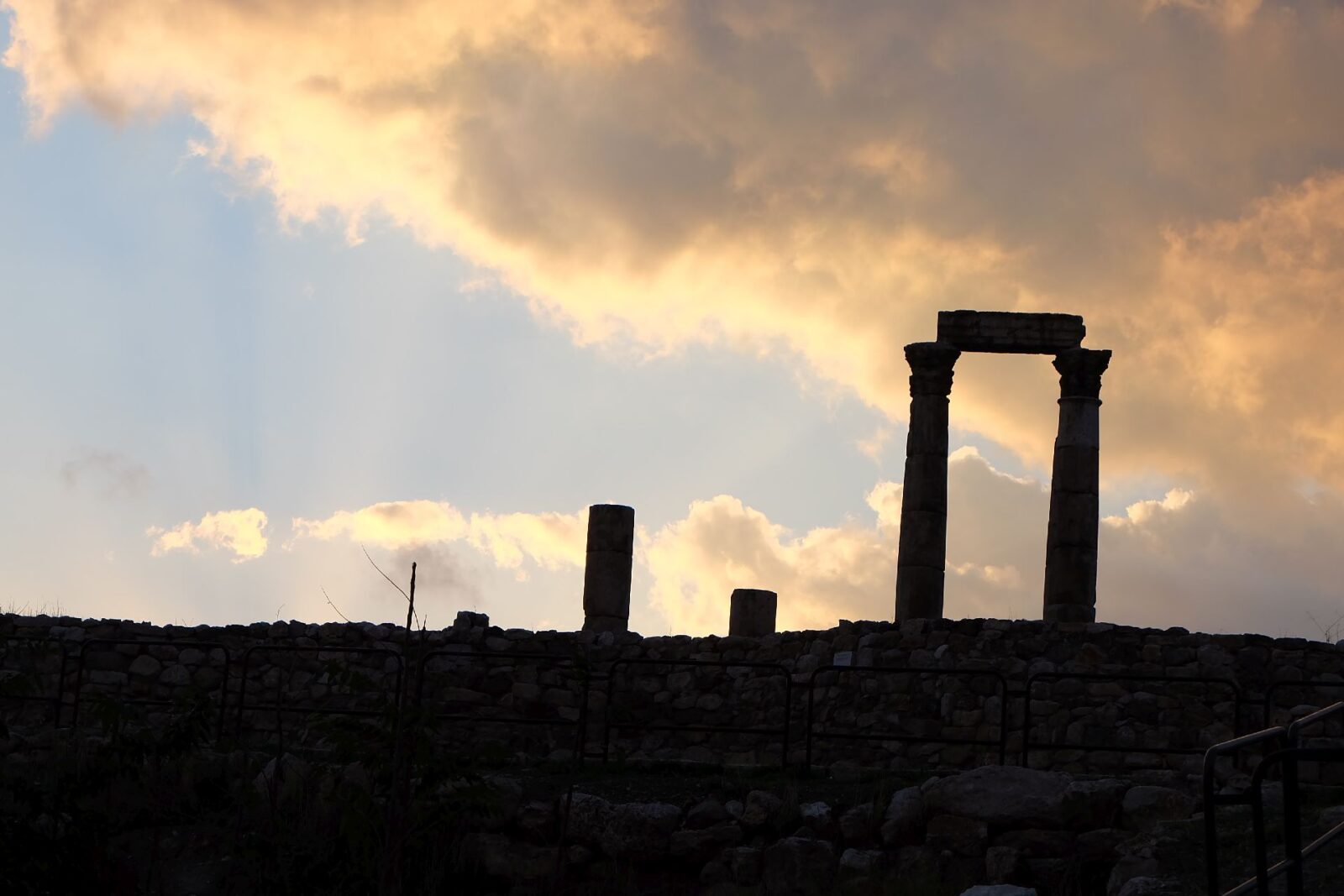
Standing there, Amman felt less like a capital and more like a place that had learned to persist — adapting, absorbing, continuing.
We ended the day having moved from a city left open to the sky to one still actively living over itself. Jerash offered clarity through preservation. Amman offered complexity through use. Together, they made a more nuanced beginning to Jordan than we had expected.
Leave a Reply