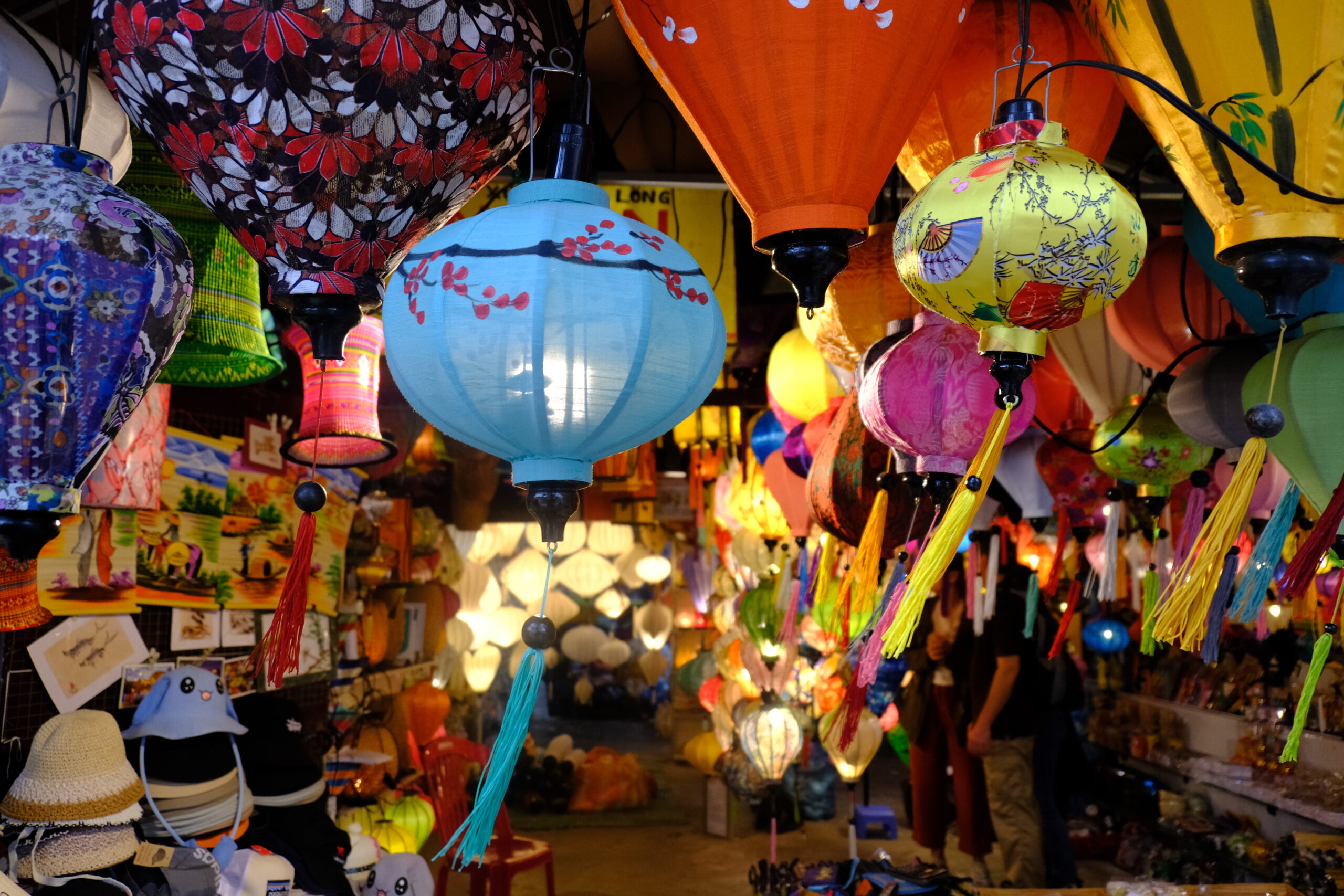
It was hard to say goodbye to My Son, but Hoi An was calling us back — quietly, without urgency. Not with promises of history or sights, but with the sense that there was time to be spent there. Time to walk, to linger, and to do very little with intention.
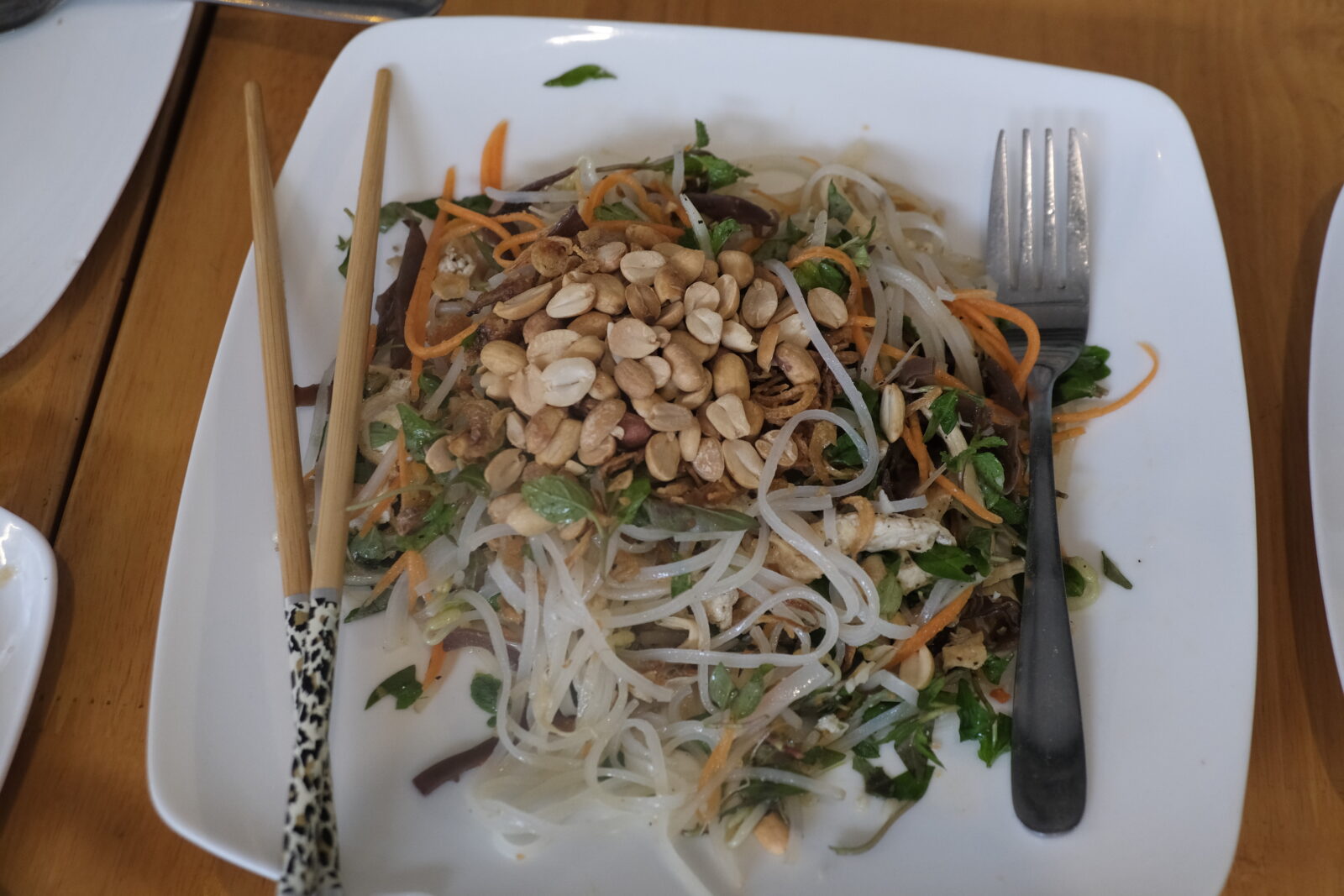
Before setting out to explore the town, we stopped for lunch. Our guide took us to Minh Hien Vegetarian Restaurant, a small, comfortable place with a homely feel. We ordered a set menu meant for two, and it arrived without ceremony.
The first dish was banh xeo — crisp pancakes served with greens, rice paper, and dipping sauce. The staff showed us how to wrap everything together the local way, offering just enough instruction before stepping back. Special noodles followed, and then grilled tofu wrapped in banana leaf, fragrant with mushroom, onion, and turmeric. The food was simple, aromatic, and deeply satisfying. We ended with coconut coffee — ice cream layered with coconut and coffee flavours — cooling and indulgent, and exactly what the heat demanded.
After lunch, we began a walking tour through Hoi An’s ancient town. It carries a UNESCO World Heritage label, but that designation barely crossed our minds as we walked. What stayed with us instead was the scale of the place — human, intimate, and easy to move through.
We started at the west end of Nguyen Thai Hoc Street, where a replica of a red seal ship stands as a quiet reminder of historic ties between Vietnam and Japan. The street unfolded gently: old shophouses, cafés, tailor shops, and small details that rewarded slow walking rather than attention.
The heat was constant and unavoidable. It slowed us down whether we wanted it to or not, and eventually we stopped resisting it. Walking became less about covering ground and more about noticing what was immediately around us.
We stepped into Phung Hung Ancient House, one of Hoi An’s well-preserved merchant homes. Inside, the pace softened further. Antique furniture, filtered light, and architectural details revealed layers of Vietnamese, Chinese, and Japanese influence. Eighteen wooden columns stood on marble bases to protect against humidity — a practical detail that lingered simply because we were moving slowly enough to notice it.
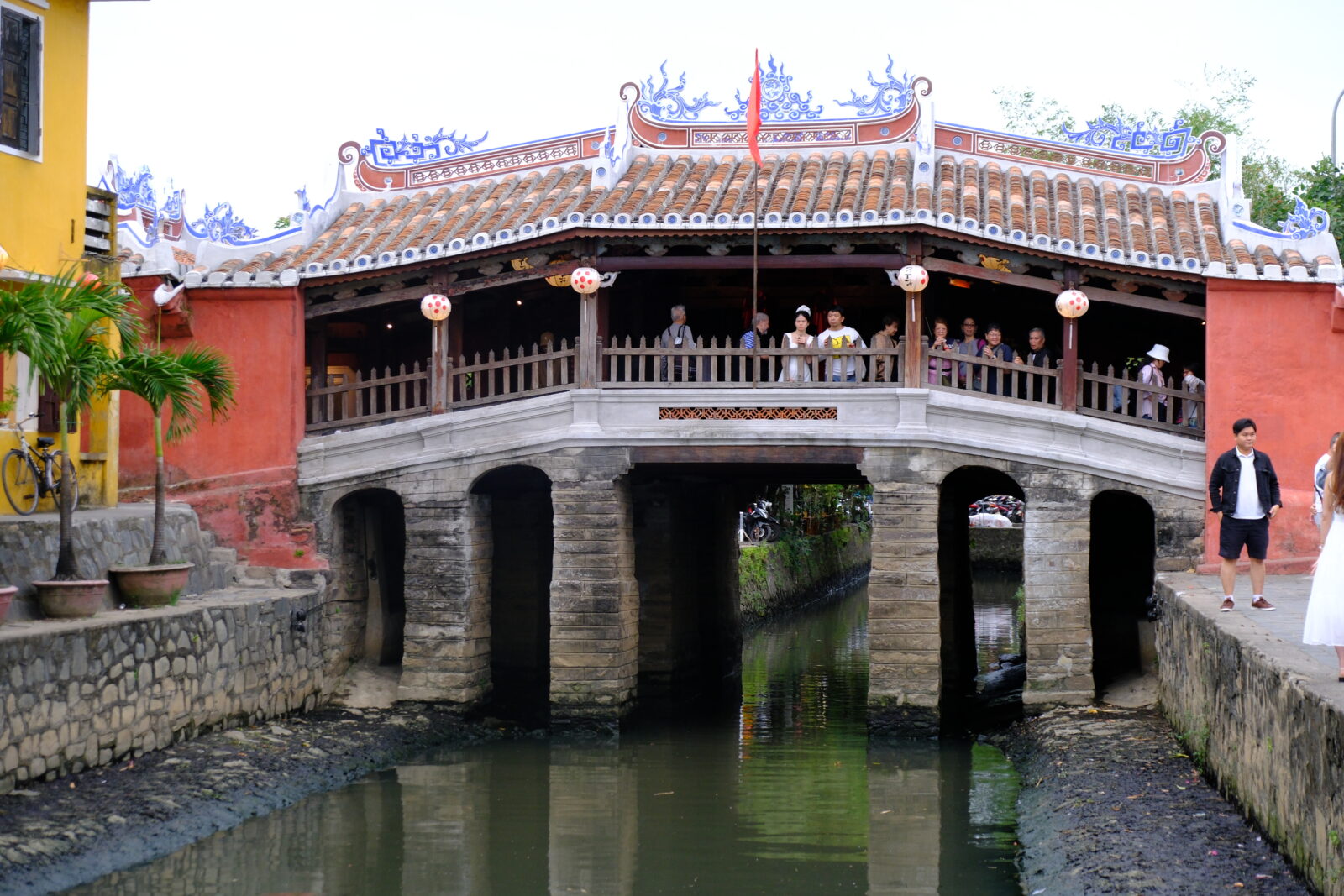
Just next door stood Hoi An’s most recognisable landmark, the Japanese Covered Bridge. Built in the 16th century to connect Japanese and Chinese quarters, it remains both functional and symbolic. A guardian dog stands at one end, a monkey at the other, and a small temple rests at the centre, watching quietly over the stream below.
From there, we visited the Assembly Hall of the Chinese Congregation. Ornate carvings, dragon statues, and bursts of colour filled the space. It was beautiful, but more than that, it felt lived-in rather than preserved for display. We later stopped by the Museum of Trade Ceramics, housed inside a restored wooden building. The exhibits traced Hoi An’s role as a trading port, with connections stretching across Asia, the Middle East, and beyond. Even here, history remained in the background, present but not demanding attention.
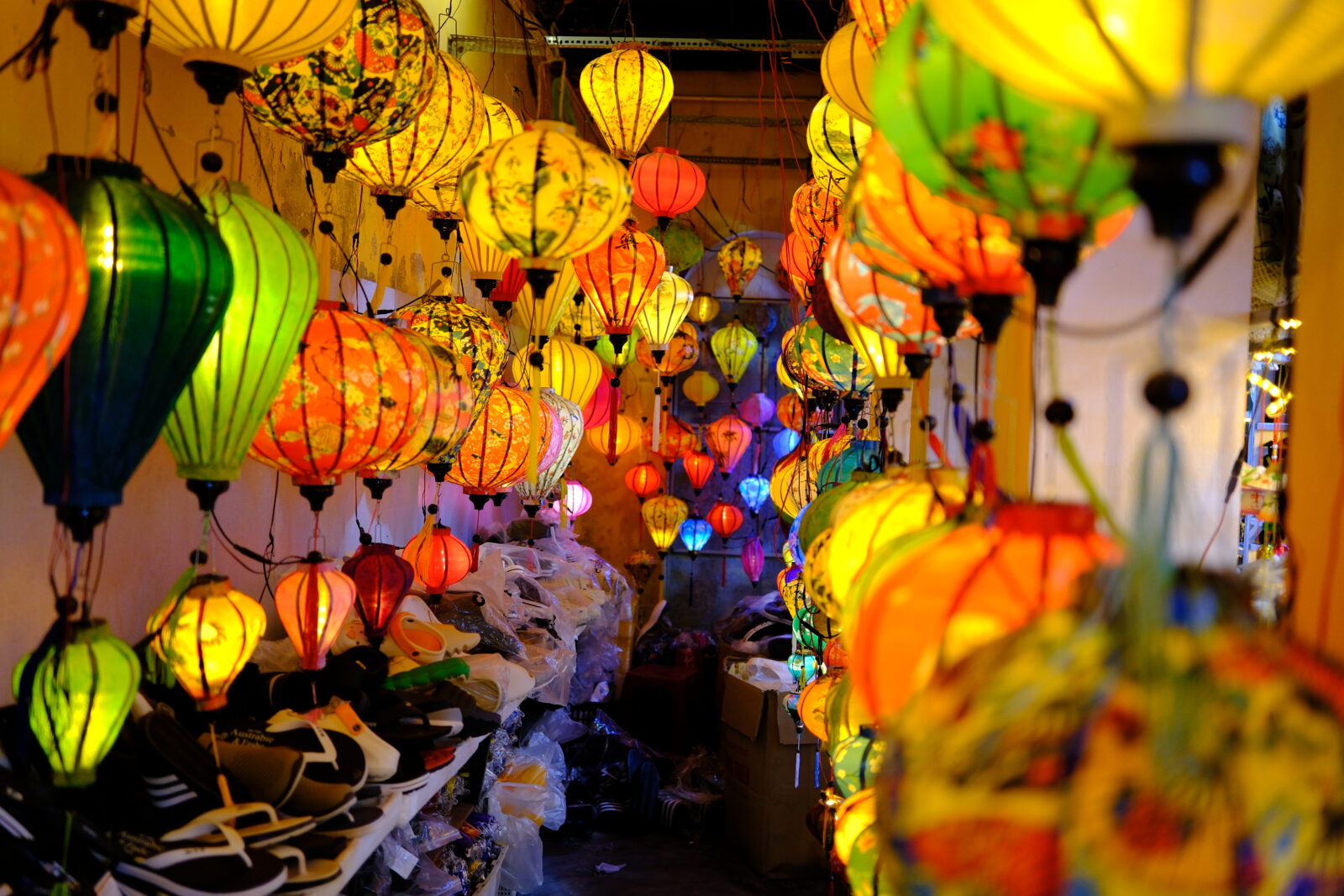
As evening settled in, we made our way to the river for one of Hoi An’s most familiar experiences — a lantern boat ride. The town softened further as lights reflected on the water and movement slowed again.
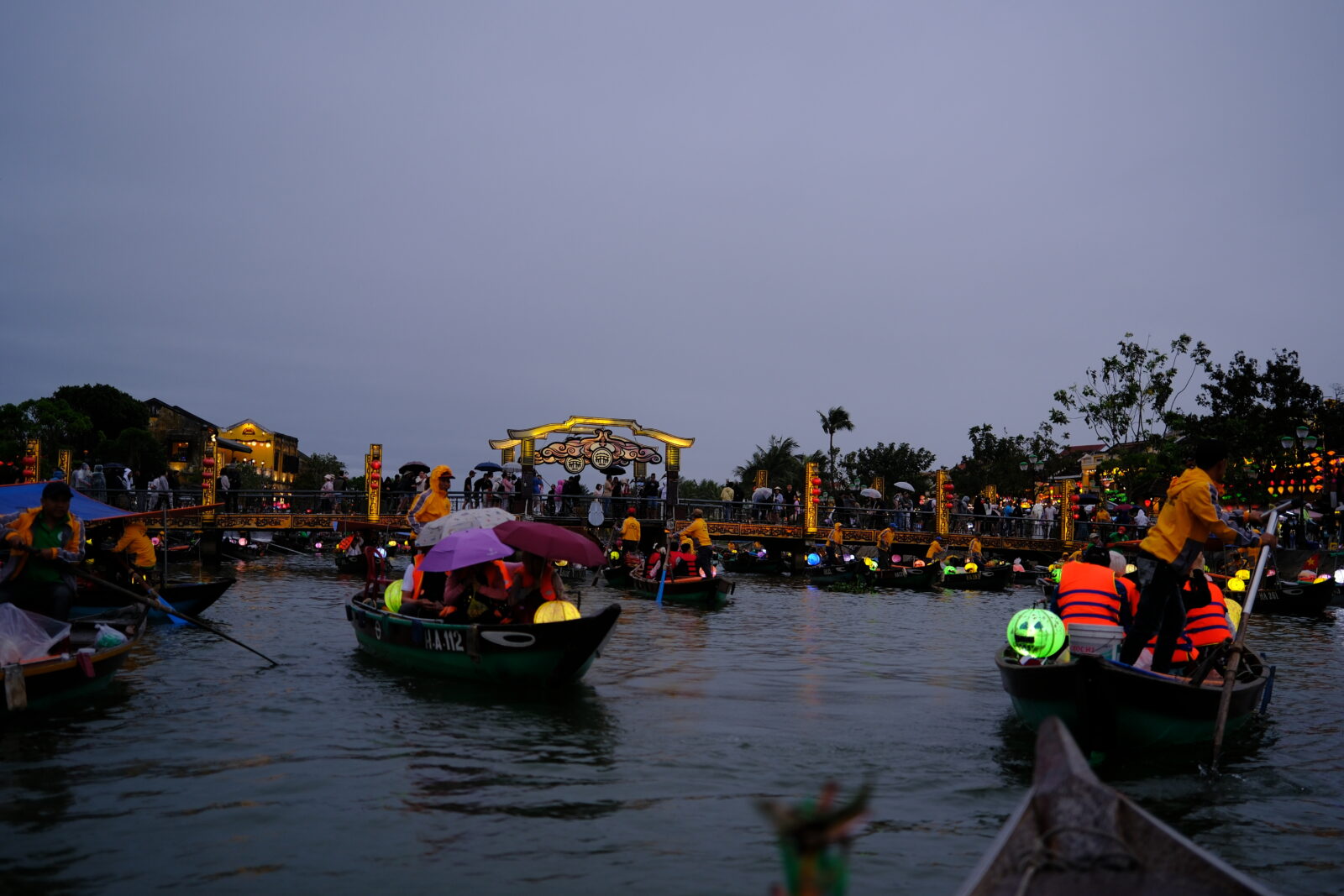
Floating gently along the river, the boatman remarked that it was nicer than Venice. We hadn’t been to Venice ourselves, so we took it for what it was — a comment made in passing, shaped by the moment. Hoi An was touristy, there was no denying that, but the scale was smaller and the pace slower. It felt easier to be present without constantly feeling watched or hurried along.
Hoi An, for us, was not about history. It was about slowing down. About spending time in a small town that didn’t insist on being understood, only experienced. Walking, eating, sitting quietly — all of it felt sufficient.
When we returned to our hotel that evening, nothing dramatic lingered. There were no highlights to rank and no checklist completed. Just the sense that time had stretched a little, and that we had willingly stretched with it.
Leave a Reply