The morning in Kalilino village began quietly. Frost still lingered on rooftops and the village stirred slowly into the new year. After breakfast, we began the next leg of our journey — a long drive towards one of Kazakhstan’s most celebrated natural landscapes, the Charyn Canyon.
The drive itself unfolded across vast open terrain, reinforcing one of the most striking impressions of Kazakhstan — its scale. Distances here are not merely numbers on an itinerary; they shape the rhythm of travel. Roads stretch across steppes and mountains with long stretches of silence broken only by occasional settlements and grazing livestock.
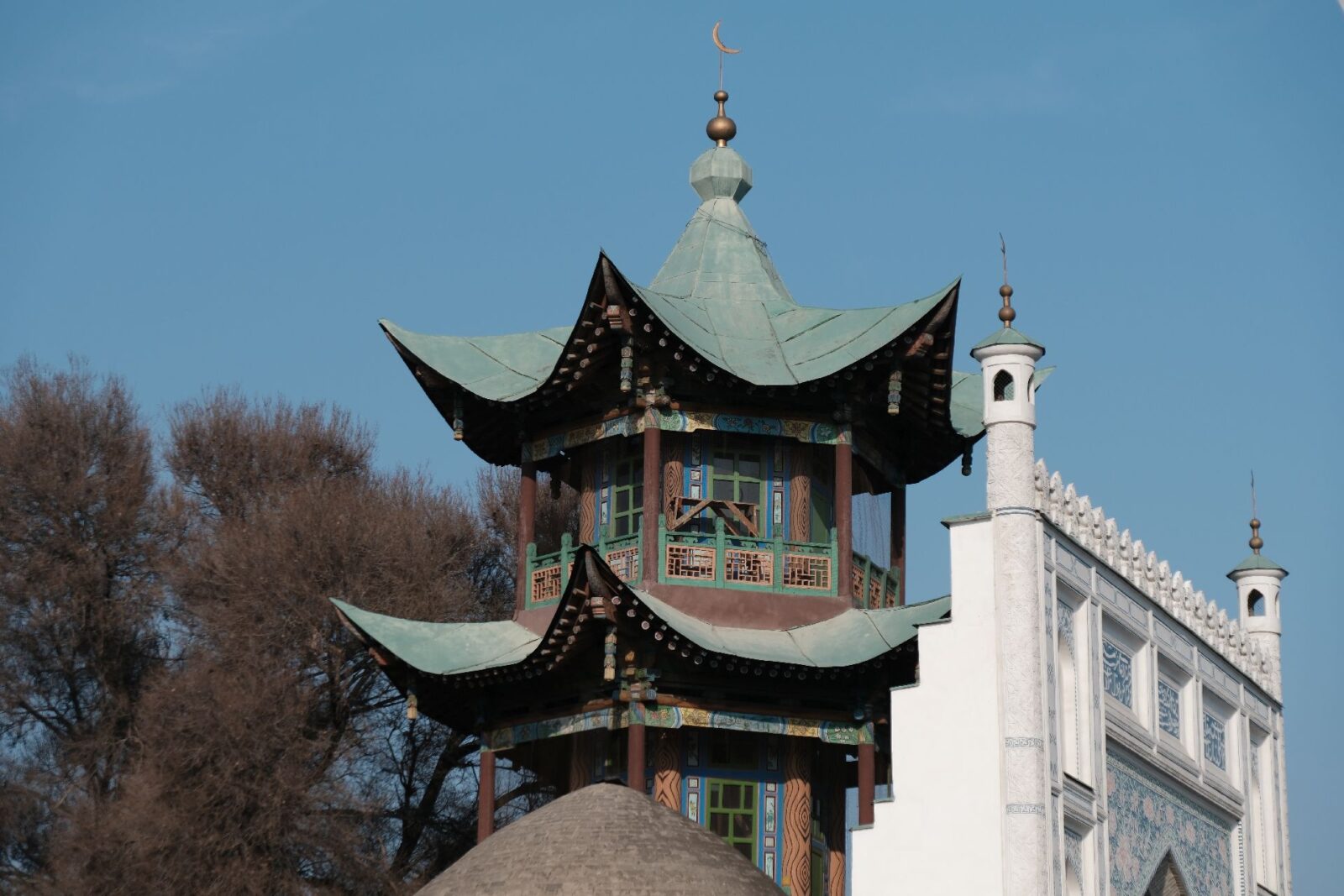
Along the way, we made a planned diversion to the Dungan Mosque in Jarkent. Built entirely of wood without nails and reflecting Chinese architectural influence, the mosque is often cited as one of the most unique religious structures in Central Asia. Unfortunately, it was closed for New Year holidays — a rare instance where logistics overtook planning. It was mildly surprising that the closure had not been anticipated, but travel has its own way of reminding us that not everything is meant to be seen every time.
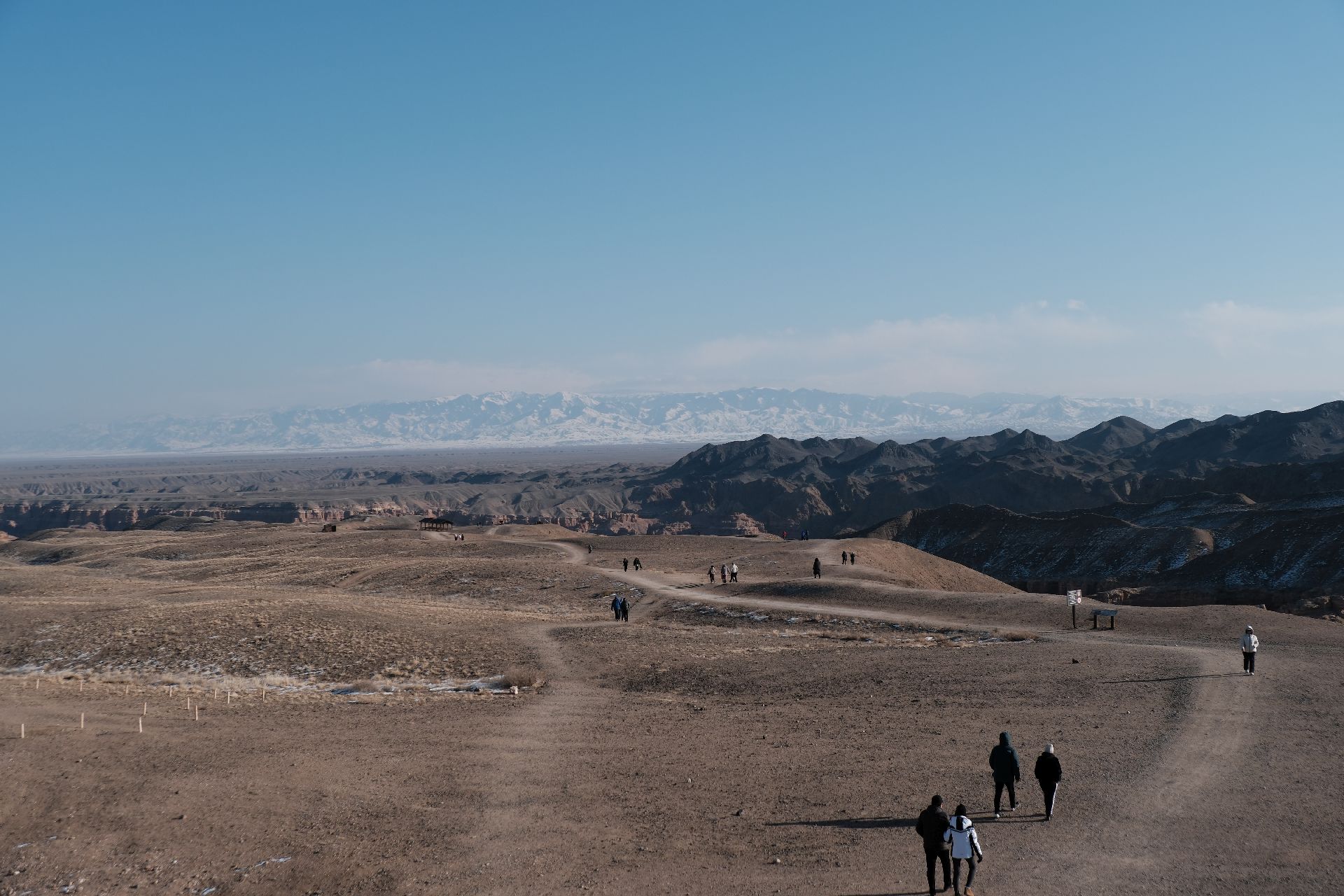
By early afternoon, the landscape began to change. The terrain deepened into layered earth tones, and soon the vast expanse of Charyn Canyon revealed itself.
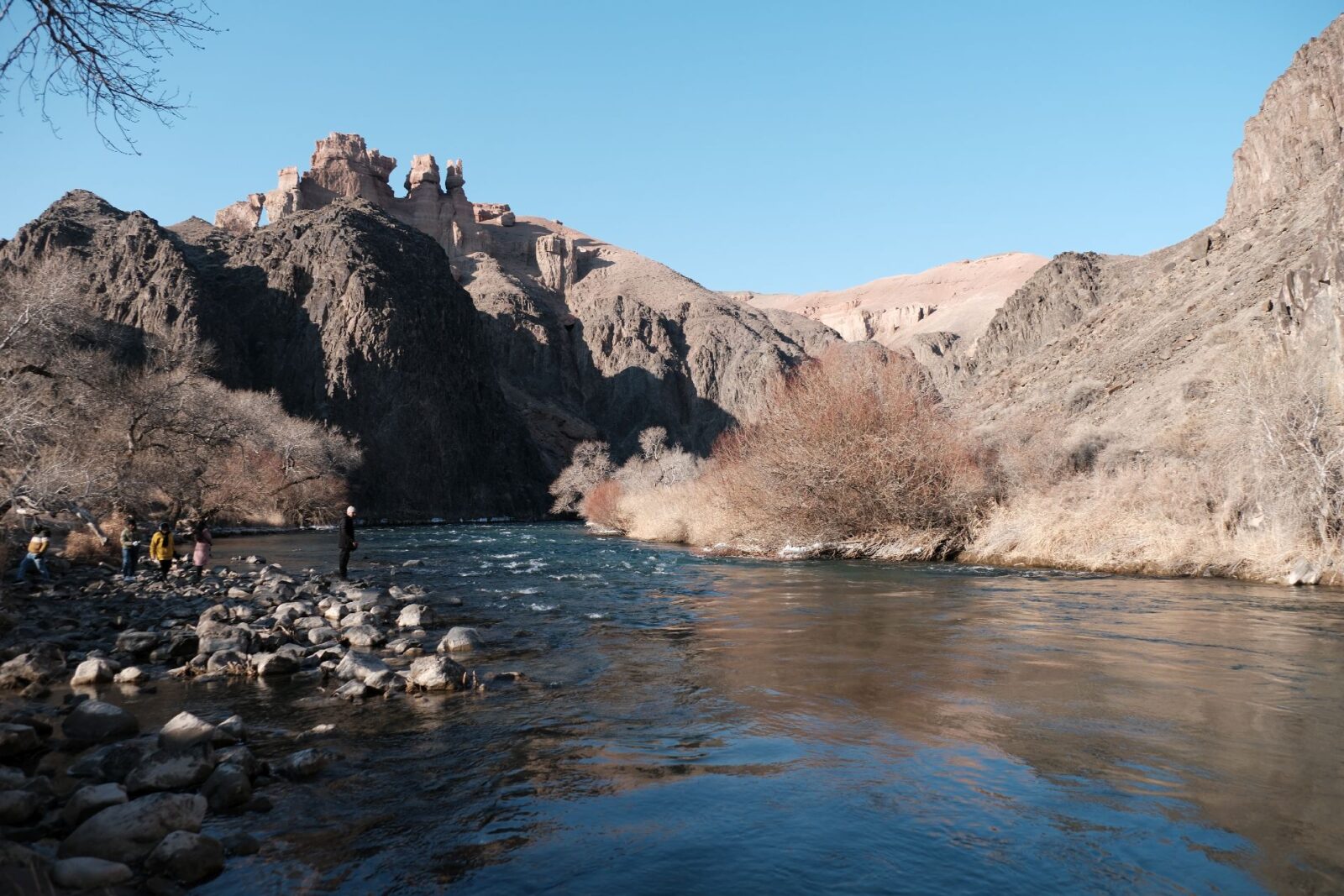
Often referred to as the “Grand Canyon of Kazakhstan”, the comparison is understandable, though Charyn possesses its own character. Formed over millions of years by the Charyn River cutting through sedimentary rock, the canyon is a complex arrangement of towering cliffs, narrow valleys, and sculpted rock formations shaped by wind, water, and temperature extremes.
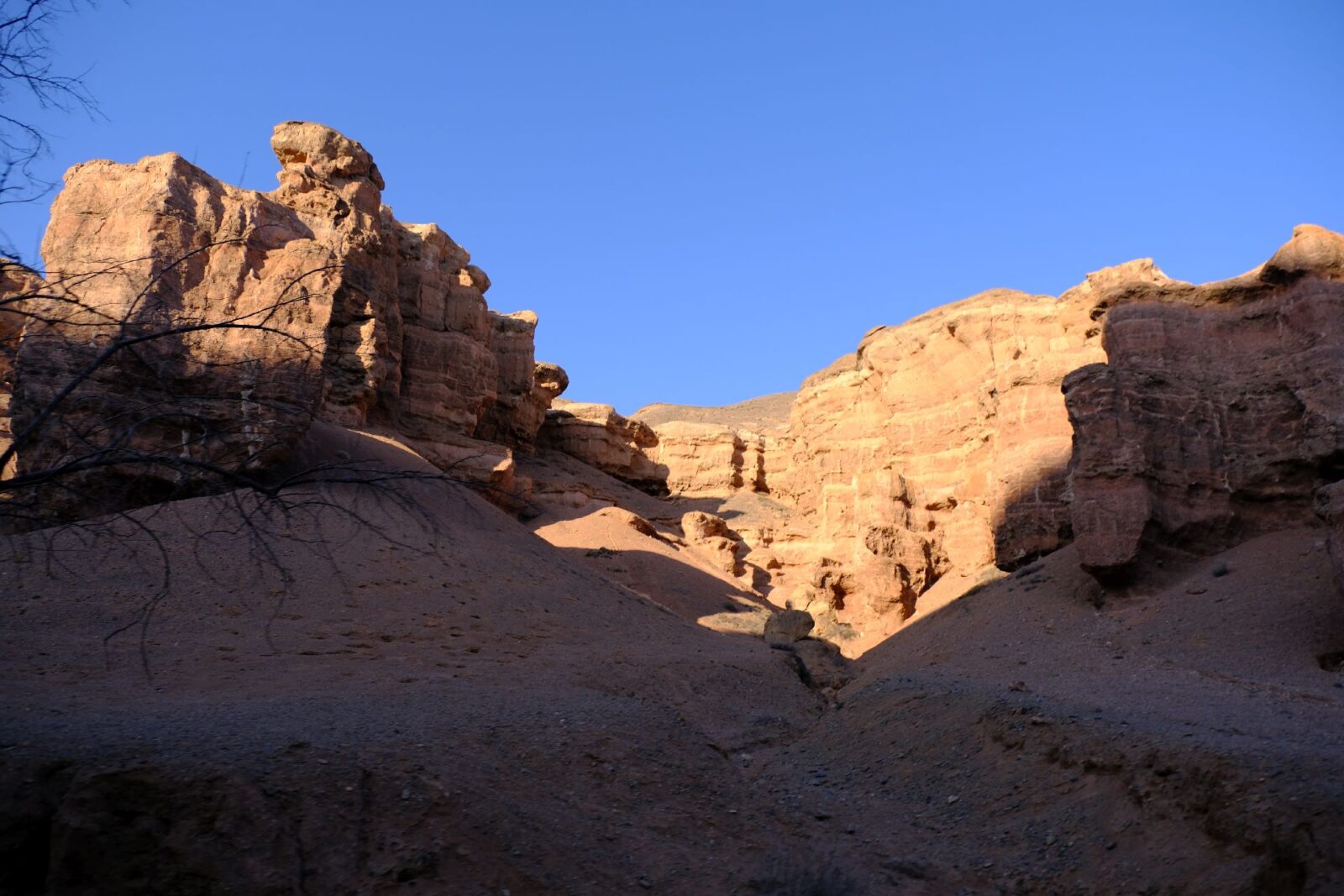
Walking along the rim, the canyon appeared almost surreal — red and ochre formations rising sharply against a pale winter sky. Unlike many crowded global landmarks, Charyn felt expansive and contemplative. The scale dwarfs human presence, and movement here becomes slower, more deliberate. Even in winter, when colours are slightly muted, the canyon retains an overwhelming sense of geological drama.
By the time we left Charyn, daylight was beginning to fade. Our journey continued towards the Kolsai Lakes region, winding gradually into mountainous terrain. Darkness had settled by the time we reached our accommodation, the Kolsay Grand Hotel. After long hours on the road, the warmth of the hotel and the stillness of the mountains outside felt especially welcoming. It was one of those quiet evenings where travel fatigue blends with anticipation for the next morning.
The following day introduced us to one of the most serene landscapes of the trip.
The Kolsai Lakes are a chain of alpine lakes located near the Kyrgyzstan border, known for their deep blue waters framed by forested slopes and mountain peaks. During our winter visit, accessibility was limited, and only the lower lake was reachable. Even there, the landscape had transformed completely under winter conditions.
The lake lay frozen, its surface reflecting pale winter light while snow traced the edges of surrounding forests. The stillness was striking. Unlike summer visits where hiking trails and boating activities dominate, winter reduces the landscape to something almost meditative.
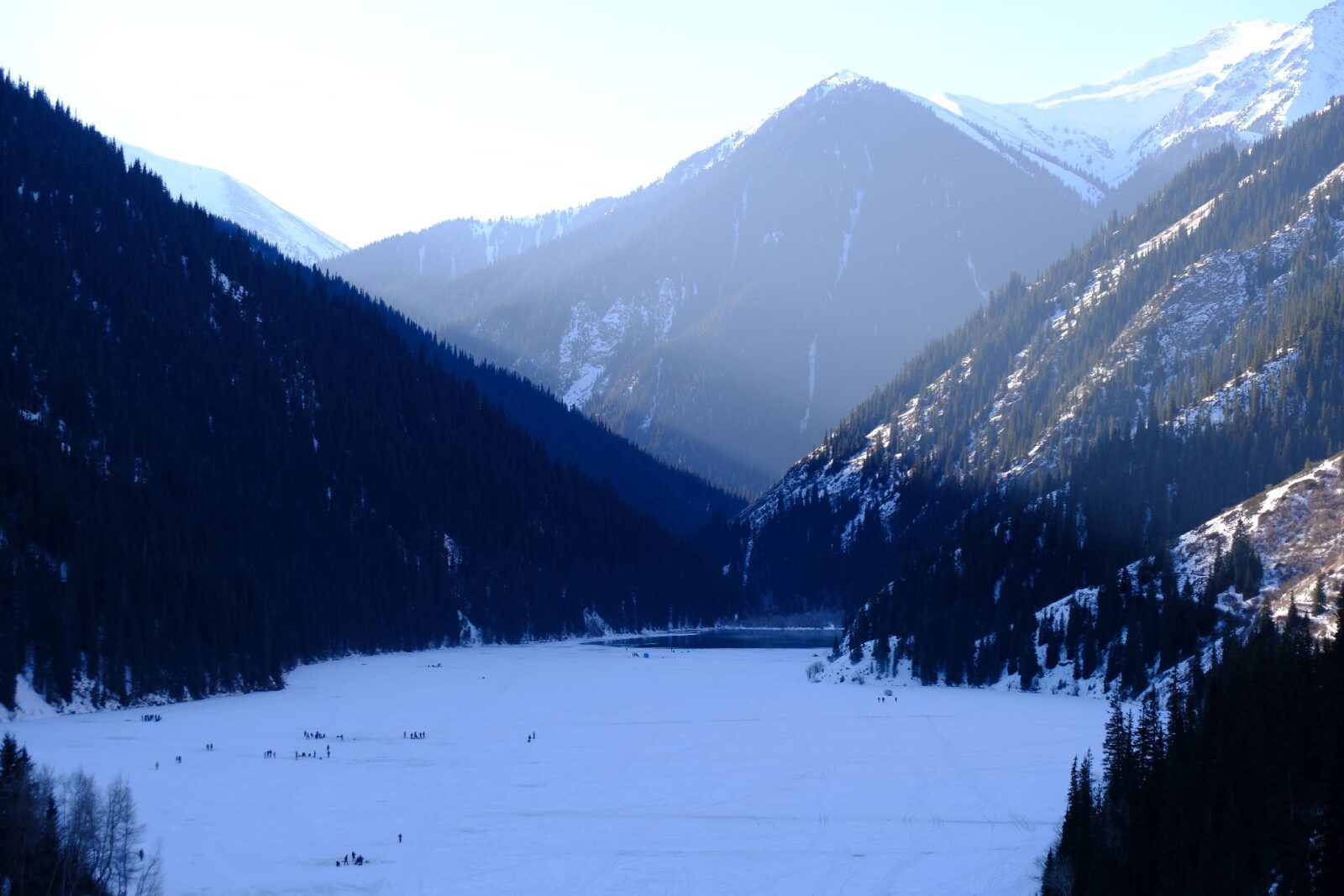
We chose not to hike down fully to the lake’s edge. Instead, we spent time absorbing the scene from vantage points along the trail — sometimes travel is less about reaching the centre of a destination and more about recognising when to pause.
By mid-afternoon, we began the long return drive to Almaty. As the mountains gradually receded into the horizon, the transition from wilderness back to urban life felt gradual and unhurried.
That evening, we returned to Arbat Street — lively, illuminated, and still carrying festive New Year energy. Street performers, small craft stalls, and families strolling through the pedestrian avenue created an atmosphere of easy celebration. Compared to the vast solitude of the previous two days, Arbat offered a reminder of Kazakhstan’s modern urban personality — youthful, relaxed, and quietly cosmopolitan.
Our final full day in Kazakhstan was spent exploring everyday city life in Almaty.
The Green Bazaar was our first stop — a vibrant marketplace where local life unfolds in its most authentic form. Stalls displayed an abundance of dried fruits, nuts, spices, cheeses, and traditional Central Asian sweets. Vendors offered samples generously, and the atmosphere was animated without feeling overwhelming. Markets often provide some of the most genuine cultural insights, revealing not monuments or curated heritage, but the rhythms of daily living.
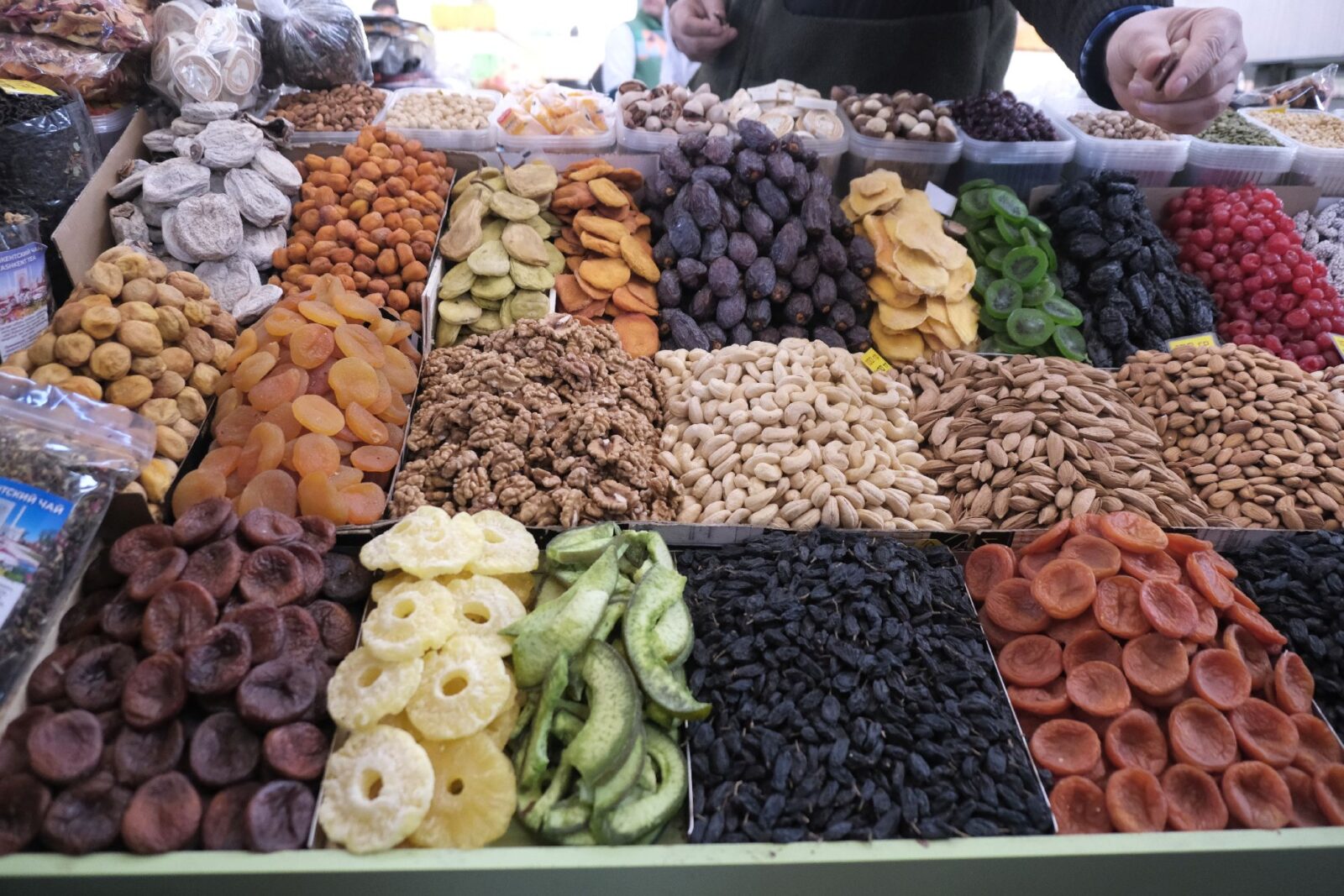
From the bazaar, we made our way to Kok-Tobe Hill, one of Almaty’s most popular vantage points. The cable car ride itself offered sweeping views of the city stretching towards the snow-covered Tian Shan mountains. At the summit, the landscape shifts into a blend of recreational space and observation point. Families, tourists, and locals gathered around viewing decks, cafés, and small attractions while the city unfolded below in quiet winter light.
From Kok-Tobe, Almaty appeared balanced between nature and urban growth — a city framed constantly by mountains, never allowing its skyline to forget the landscape that surrounds it.

Looking back, Kazakhstan felt distinct from Uzbekistan in both character and memory. While Uzbekistan immersed us in history, architecture, and Silk Road heritage, Kazakhstan offered vast natural landscapes, slower rhythms, and encounters shaped by distance and silence.
Travel here is shaped as much by the journey between destinations as by the destinations themselves. Long drives, quiet villages, frozen lakes, and open skies define the experience as strongly as canyons and mountains.
Kazakhstan may not overwhelm travellers with dense clusters of monuments or historical landmarks at every turn. Instead, it reveals itself through scale, atmosphere, and the gradual unfolding of landscape. It is a country that invites patience, rewarding those willing to travel slowly and observe carefully.
As our flight departed from Almaty, the final memory that remained was not a single location but a sequence of contrasts — festive city streets, silent winter lakes, vast desert terrain, and mountains fading into horizon light. Together, they formed a journey that felt less like a checklist of destinations and more like a passage through landscapes that quietly reshape perspective.
Leave a Reply