Dubai is rarely understated. It builds upward, outward and often beyond proportion, and its dining scene follows the same instinct — skyline terraces, dramatic interiors, tasting menus designed to unfold like theatre. Excess is not something the city apologises for; it is part of its confidence.
And we have enjoyed it.
Over the years, Dubai has satisfied the foodies in us to the hilt. Anniversaries, birthdays and small personal milestones have almost automatically translated into reservations. We do not throw parties. We book tables. Somewhere new, somewhere thoughtful, somewhere that promises a certain ambition. Our anniversaries are bookmarked by tasting menus.
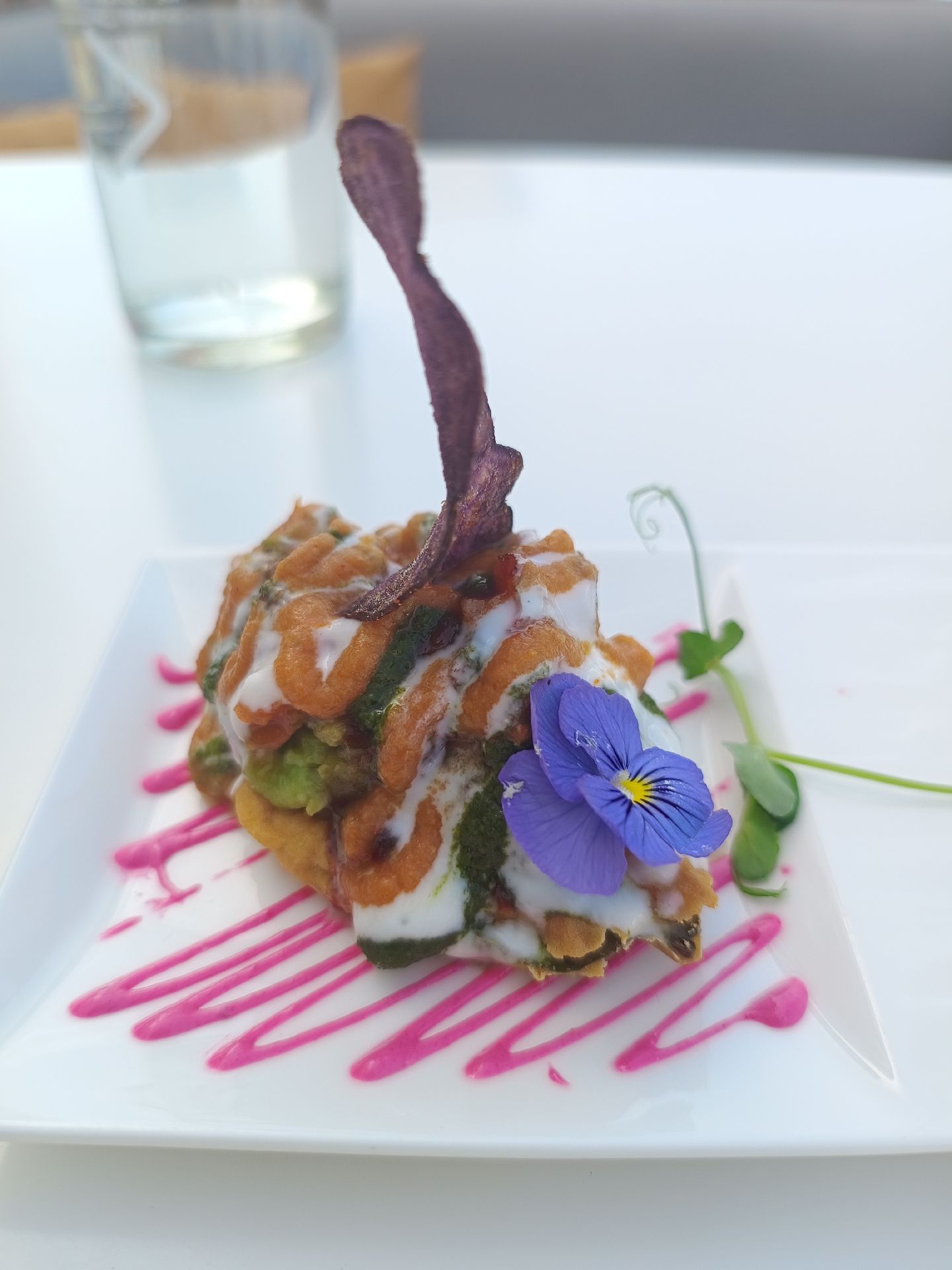
It began at Mahec at Le Méridien, where we first realised that celebration could be structured around courses rather than conversation drifting in and out of a crowded room. The spices felt deliberate, the presentation composed, the evening paced. We have returned often, partly for the food and partly for the quiet familiarity of knowing that this is where our ritual began.
Since then, the city has offered many such evenings. At Armani/Amal, dining beneath the Burj Khalifa carries its own sense of occasion, as though Indian flavours are framed against one of the world’s most recognisable skylines. At Mint Leaf of London, the terrace opens out to the city lights while cocktails reinterpret familiar ingredients — tamarind, cumin, chilli — in ways that feel inventive without being theatrical. We find ourselves studying the bar menu as carefully as the food, curious to see how spices translate into liquid form.

Over time, something shifted — not so much in the restaurants, but in us.
In the early years, we were drawn to intensity. Rich gravies signalled indulgence, assertive heat felt exciting, and elaborate plating impressed. Now, we look for balance. We notice how asparagus might be folded gently into a traditional preparation, or how broccolini carries the hint of pickle and smoke without overwhelming the dish. A dal that once would have been judged by richness is now appreciated for restraint and layering.

The evolution of Dubai’s Indian fine dining scene has mirrored that change in us. Traditional dishes are being reinterpreted in modern forms, but rarely at the cost of their essence. International ingredients sit comfortably alongside Indian spices; vegetables that once felt peripheral become central. What we seek now is not surprise for its own sake, but the way flavours are blended with care.
That care is visible even in reinterpretations of festive meals. At The Crossing, an Onam sadhya was presented with quiet precision — twenty-five elements neatly arranged, flavours subdued yet distinct. It was a marked contrast to the joyous rush of sadhya back home, where servers move quickly and the banana leaf fills almost faster than one can register. Here, the pace slowed. The same traditions felt composed rather than chaotic.
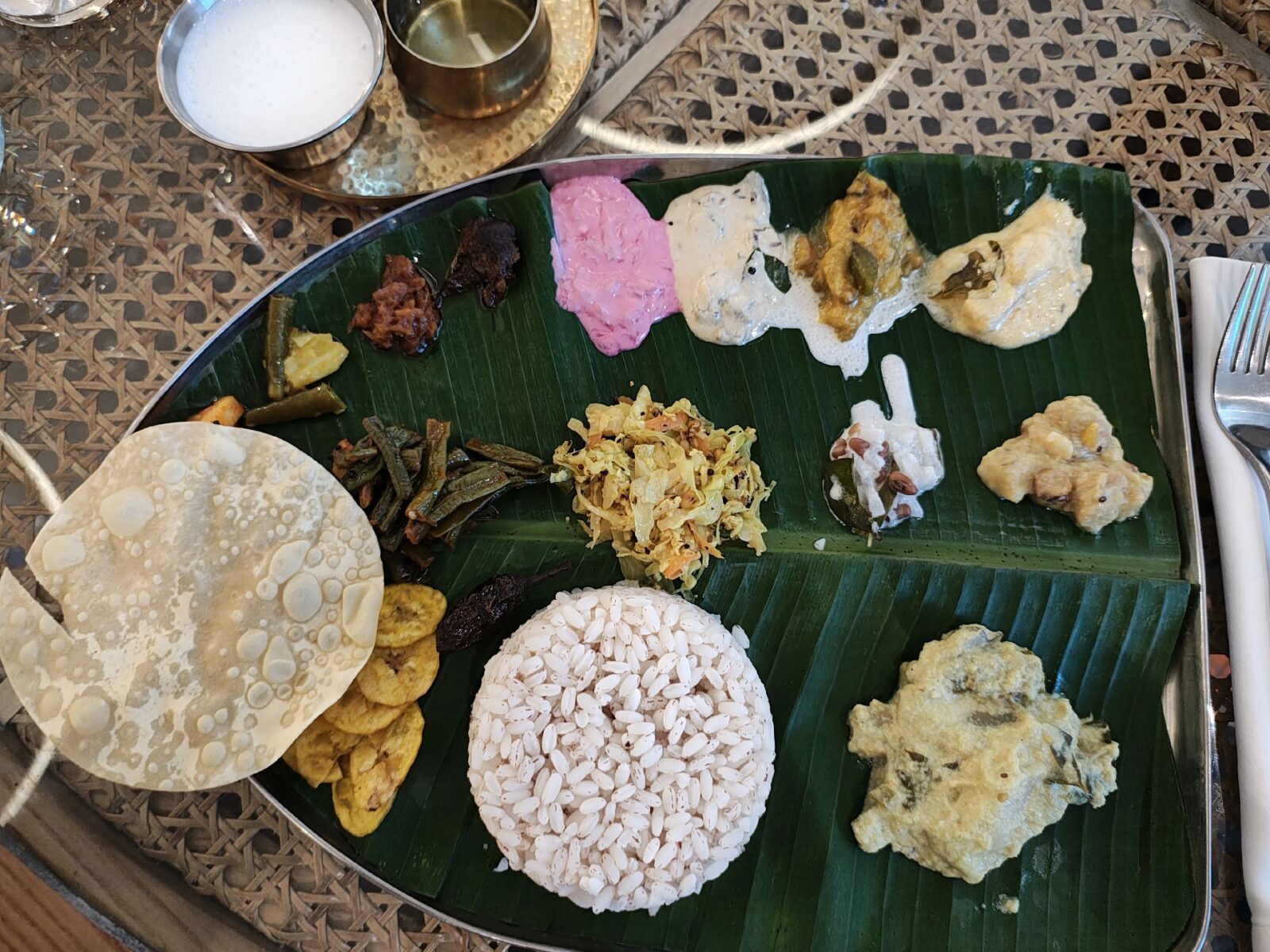
An evening at Avatara offered yet another perspective — fifteen vegetarian courses, each scarcely more than a mouthful. The scale was small, but the intention was not. Without relying on meat or extravagance, the menu moved through flavour, texture and colour with quiet confidence. It reinforced something we had begun to value more deeply: discipline can be just as satisfying as indulgence.

There is, occasionally, a small moment of quiet amusement in these refined settings. Indian food, at its heart, is tactile — it invites mixing, scooping, gathering flavours together. Yet more often than not, the table is set with knife and fork alone, as though the choreography of eating must follow global fine-dining codes. We comply, of course. But every now and then, we find ourselves instinctively looking around for a spoon.
Dessert, of course, remains the final pleasure. This is often where nostalgia and experimentation meet most clearly — a familiar imarti reimagined, shrikhand lightened, coconut transformed into something unexpected. Sweetness becomes both memory and interpretation.
Recently, while watching a few episodes of Bon Appétit, Your Majesty, we found ourselves smiling at the king’s obsession with nuance. The ability to detect balance, to value restraint over excess — it felt faintly familiar. Perhaps years of dining in Dubai have trained our palate in quiet ways. Not to critique, but to notice.
And yet, the joy of simple food remains untouched. Just last evening, when we ran out of dinner ideas, the answer was obvious — a straightforward tomato-onion curry for chapati, the kind found on most Kerala restaurant menus. Few ingredients. Deeply satisfying. Nothing complicated. Impossible to get wrong.
For all its excess, Dubai has taught us precision. It has shaped our palate, nudged us towards subtler flavours and given us a way to mark time — quietly, course by course.
And so we keep reserving tables.
Leave a Reply