Kerala’s sacred spaces unfold differently — not as destinations to be completed, but as moments that gather meaning through return.
We come back to these temples not in search of answers, but to place ourselves within spaces shaped for attention and stillness.. Over time, these visits have become less deliberate and more instinctive. Familiar roads, remembered thresholds, the quiet reassurance of repetition. What draws us back is not belief in the transactional sense, but the feeling of alignment — of standing, briefly, in places designed to hold something enduring and unspoken.
Most of these journeys take place during the monsoon months. July and August, when rain settles into the land without urgency. Kerala is always green, but after the rains it sharpens — the air carries a smell that only appears after a night of steady downpour, and mornings arrive with a heightened clarity. These months also coincide with P’s holidays, giving us the freedom to move slowly, to stay longer, and to let the days find their own pace.
We begin early. Kerala temples open before sunrise — sometimes as early as three or four in the morning — and by mid-morning the doors close again. The rhythm is fixed, and we align ourselves to it. A hired car and a familiar driver allow us to move without haste. Malayalam devotional music plays softly as we travel, setting the tone for the day. Somewhere along the way, we stop at a ചായക്കട (chaaya kada) — hot tea, perhaps biscuits carried from home — a small pause before stepping inside the first temple.
There are typically two sessions in a day. One in the morning, when everything feels fresh and quiet. Another in the evening, after some rest, when the light fades and lamps are lit. Between the two, there is waiting — unstructured time that is as much a part of the journey as the visits themselves.
Certain temples form the core of these returns.
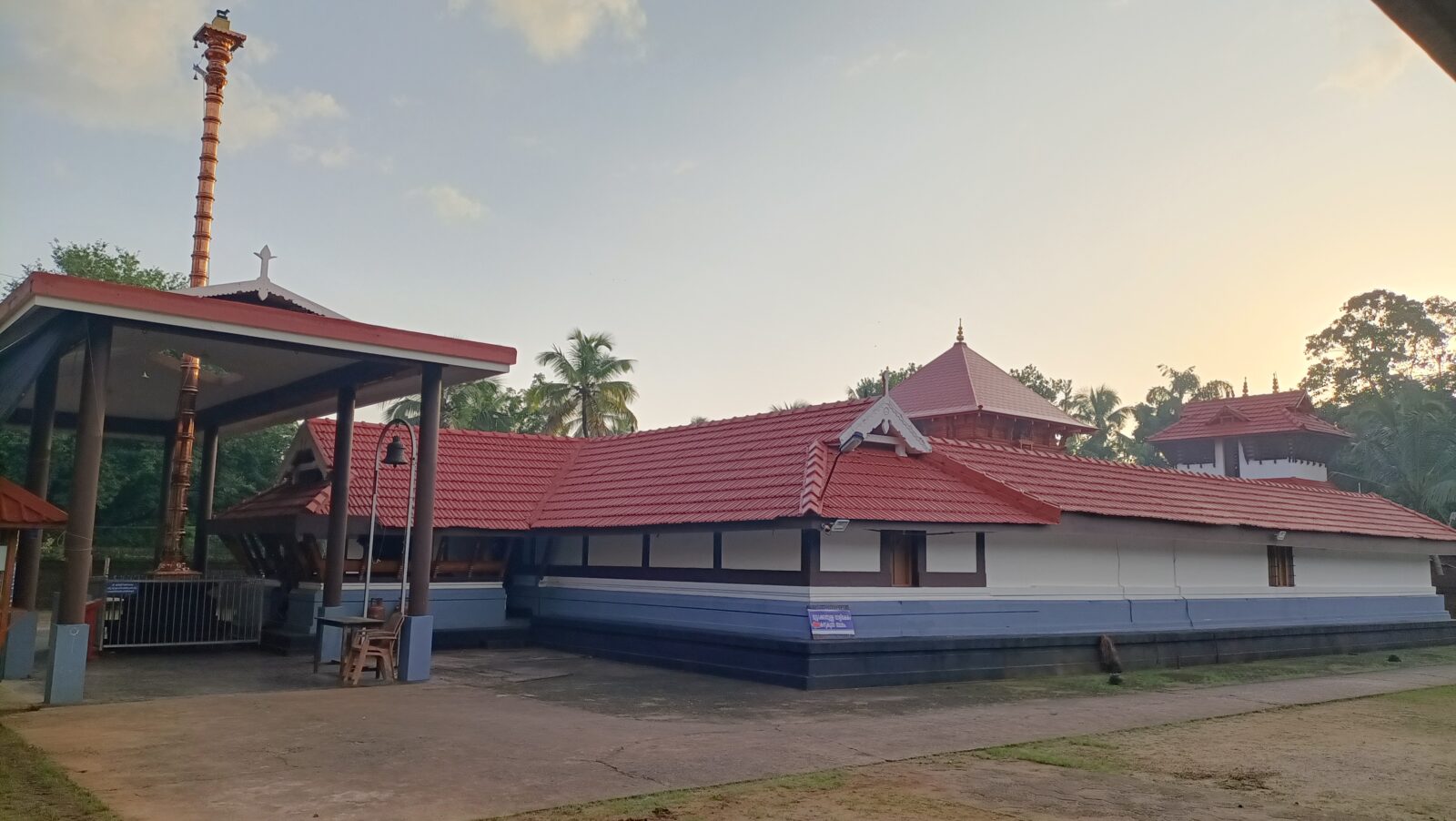
Pallassana, our adimakavu, is one such place. It exists for us as an origin — a presence that does not require description or explanation. Returning there feels instinctive, almost inevitable, shaped more by continuity than intention.
Guruvayur holds a different kind of weight. It is where we were married, and the first temple we visited together after our wedding was Guruvayurappan’s. Over time, that association has deepened into something quieter and more personal. Each visit carries layers — memory, gratitude, familiarity. There is a sense that something essential began there, something we return to not in search of repetition, but in acknowledgement. If there is such a thing as romance taking root without spectacle, it is perhaps in places like this.
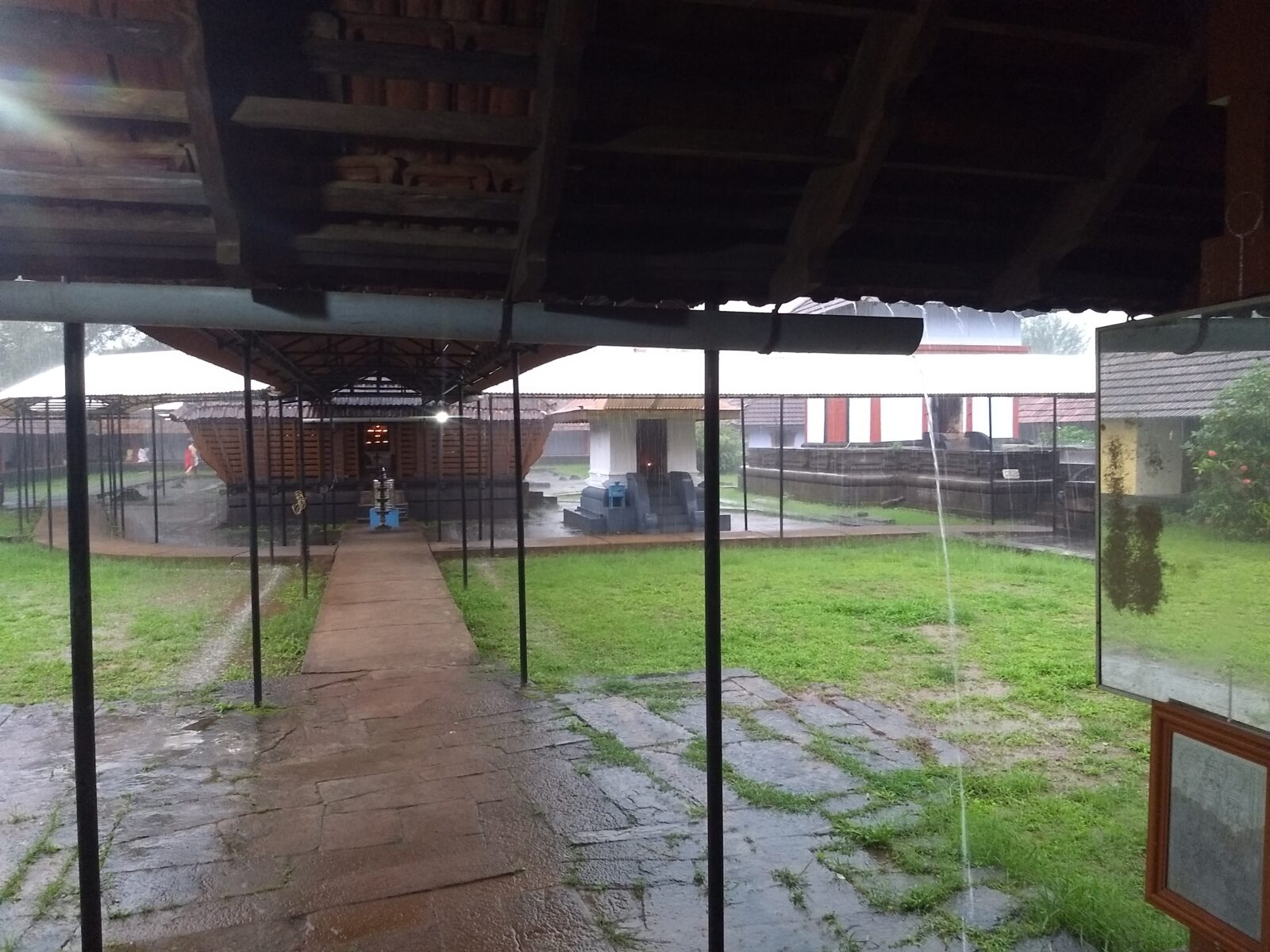
Panniyur Varahamurthy is another constant, close to our hearts for reasons that are both visual and visceral. The deity, smeared in kalabham, is visible even from outside the shrine — imposing, immediate, unforgettable. The first time we visited, a heavy downpour accompanied our darshan, a moment that has stayed with us ever since. This temple is also believed to be the first consecrated by Parasurama after the creation of Keraladesham, adding a sense of primacy that lingers in the air. Over repeated visits, familiarity has grown — not only with the space, but with those who serve there — reinforcing the feeling that return here is not incidental.
Beyond these anchors, many other temples surface across different journeys, each leaving its own impression.
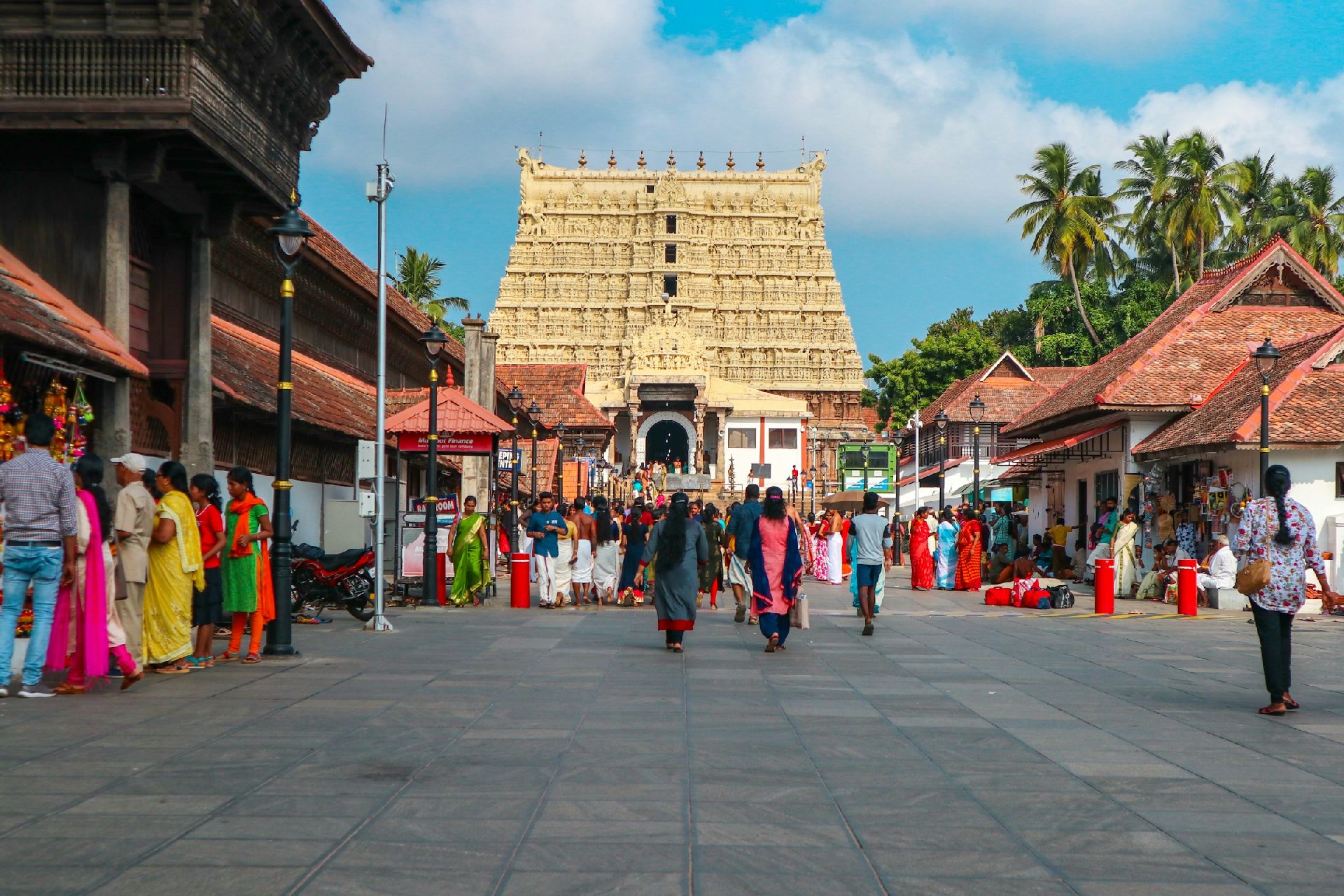
At Padmanabhaswamy Temple in Thiruvananthapuram, the act of darshan itself becomes the experience. The deity is viewed through three separate doors — head, torso, and feet — never in full view at once. The form itself suggests something larger than form, offering a reminder that what we attempt to perceive can never be entirely held.
At Mannarasala, near Alappuzha, the continuity of the ancient kavu tradition is unmistakable. Serpent worship, sacred groves, and a landscape shaped by reverence as much as ecology speak of an older relationship with divinity — one where forests, trees, and living beings were integral to worship, not separate from it.
Chengannur stands apart for its openness in acknowledging what many traditions avoid speaking of. The goddess here is believed to undergo periods — a rooted belief that evokes a deeply human response. It suggests a form of divinity that moves through life rather than standing outside it, one that participates in cycles rather than transcending them.
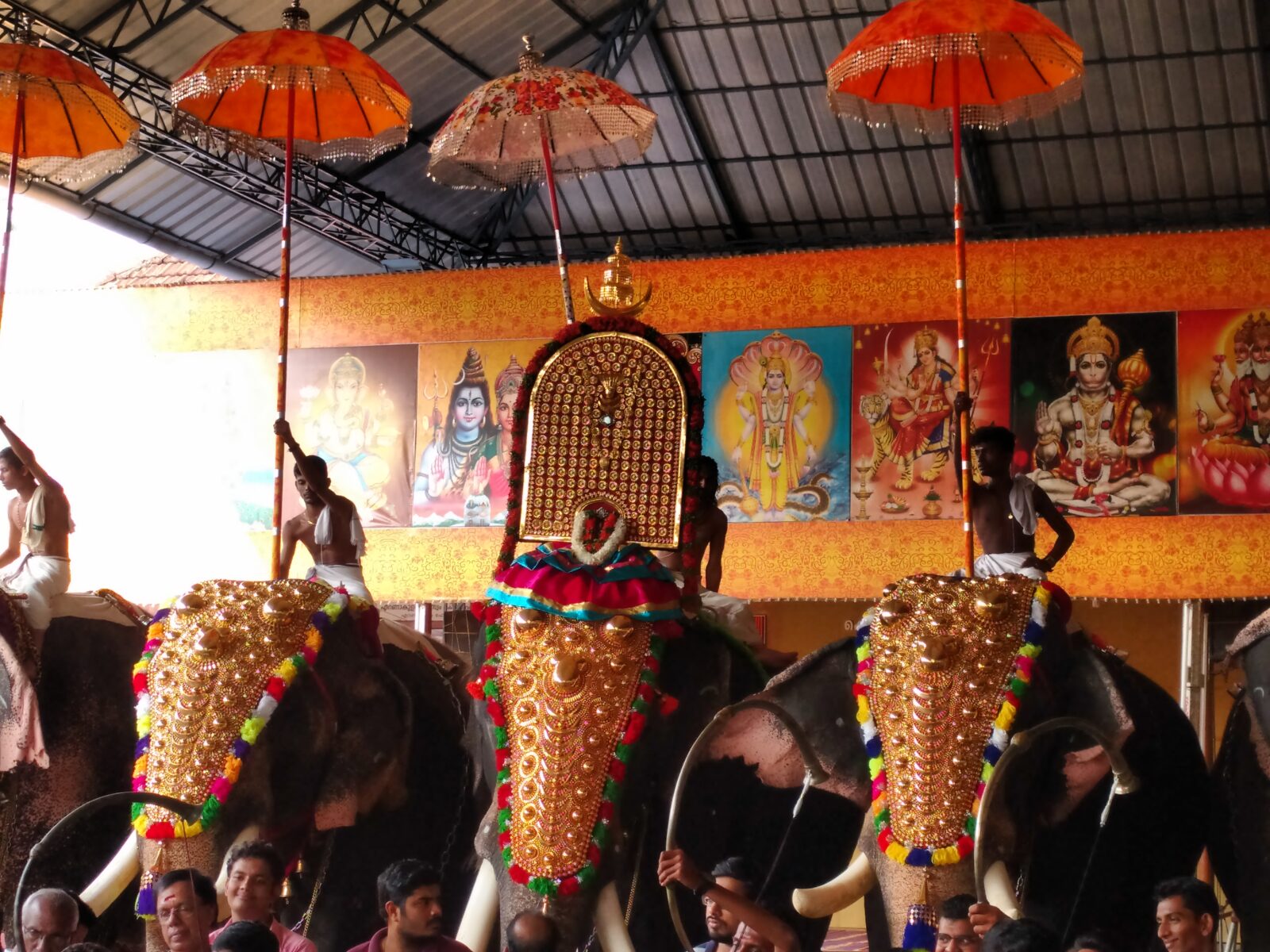
In central Kerala, temples like Thrissur Vadakkunnathan assert their presence through scale and history, while others leave their mark through atmosphere alone. During one visit to the Eranakulathappan temple festival, we stayed nearby for several nights, drawn repeatedly to the rhythms of processions, the sound of percussion, the sight of elephants being bathed and cared for, and evenings spent watching cultural performances unfold slowly in open spaces.
Further north, temples like Kottiyur — with the Akkare temple opening only for a brief period each year — remind us that access itself can be seasonal and fleeting. Being present during Vaishakam Utsavam felt less like attendance and more like chance alignment.
In Palakkad district, where we spend significant time, the temples feel particularly rooted. Some are strict in observance — reminding devotees to arrive having observed certain disciplines — and we accept these conditions willingly. The act of wearing a mundu, removing one’s shirt before entering, leaving phones and electronics behind — none of this feels restrictive. Instead, it sharpens attention. The body becomes present, unshielded, receptive.
Food becomes part of the experience in ways we don’t anticipate. Annadanam during Karkidaka masa, simple idli and chutney shared without fuss, chukku coffee offered on rainy mornings — these moments stay with us long after rituals fade. Nourishment here feels communal, not transactional.
What makes Kerala’s sacred spaces distinctive for us is not only the deity or the ritual, but the people. Priests, volunteers, and devotees who recognise us over time. Small acts of help, a nod of familiarity, a word exchanged in passing. These gestures quietly reinforce a sense of belonging — not ownership, but welcome.

Even in crowded temples, there is restraint. Cleanliness, discipline, and a shared understanding of behaviour preserve a certain calm. The space remains sacred not because it is guarded, but because it is respected.
These journeys don’t aim for completion. We don’t seek to cover regions or count visits. We return when it feels right — often during the rains — following a rhythm that has established itself over time. Kerala’s sacred spaces offer a way of slowing down that feels both familiar and necessary.
And so the returns continue — sometimes planned, sometimes instinctive — unfolding not as destinations reached, but as alignments renewed.
Leave a Reply