Day two began early as we headed north along the coast towards Huế, Vietnam’s former imperial capital. This was a day shaped more by movement than pause, more by observation than emotion—and we knew that even as it unfolded.
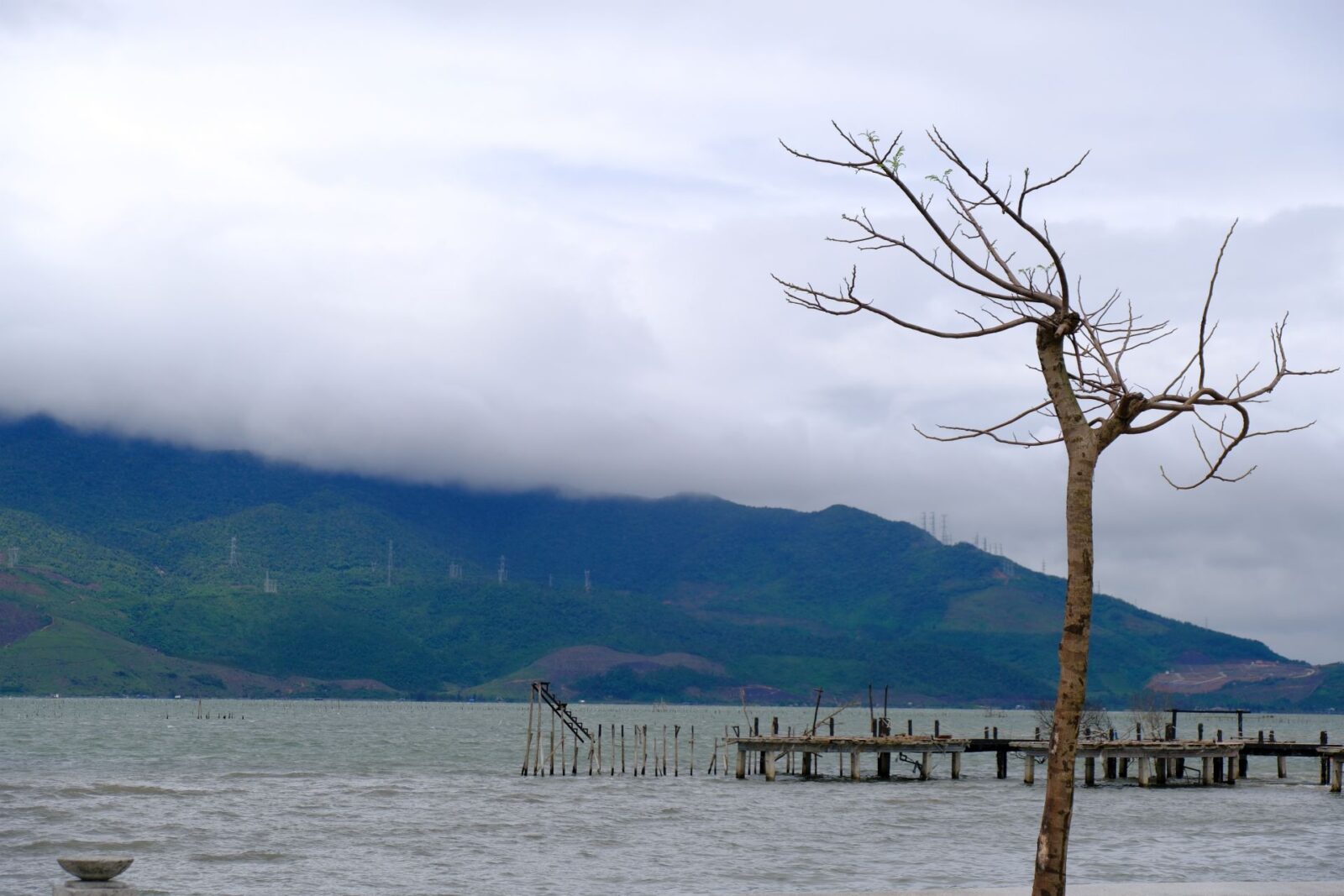
Our first stop was at Lăng Cô Lagoon, a tranquil stretch of water caught between the mountains and the sea. Calm, reflective, almost surreal, the lagoon felt like a quiet threshold between regions. We stood there briefly, breathing in air that carried both salt and rain, saying very little. It was one of those places that doesn’t demand attention, yet stays with you longer than expected.
The Road Towards Huế
As we continued north, the landscape began to shift subtly. The greenery grew denser, houses more traditional in style, and roadside markets appeared in small, unassuming clusters. It felt like we were moving away from the coast and into a region shaped by history rather than trade.
Light rain followed us for most of the day. Not enough to interrupt plans, just enough to cool the air and soften the edges of everything we saw.
Thiên Mụ Pagoda and the Fragrance River
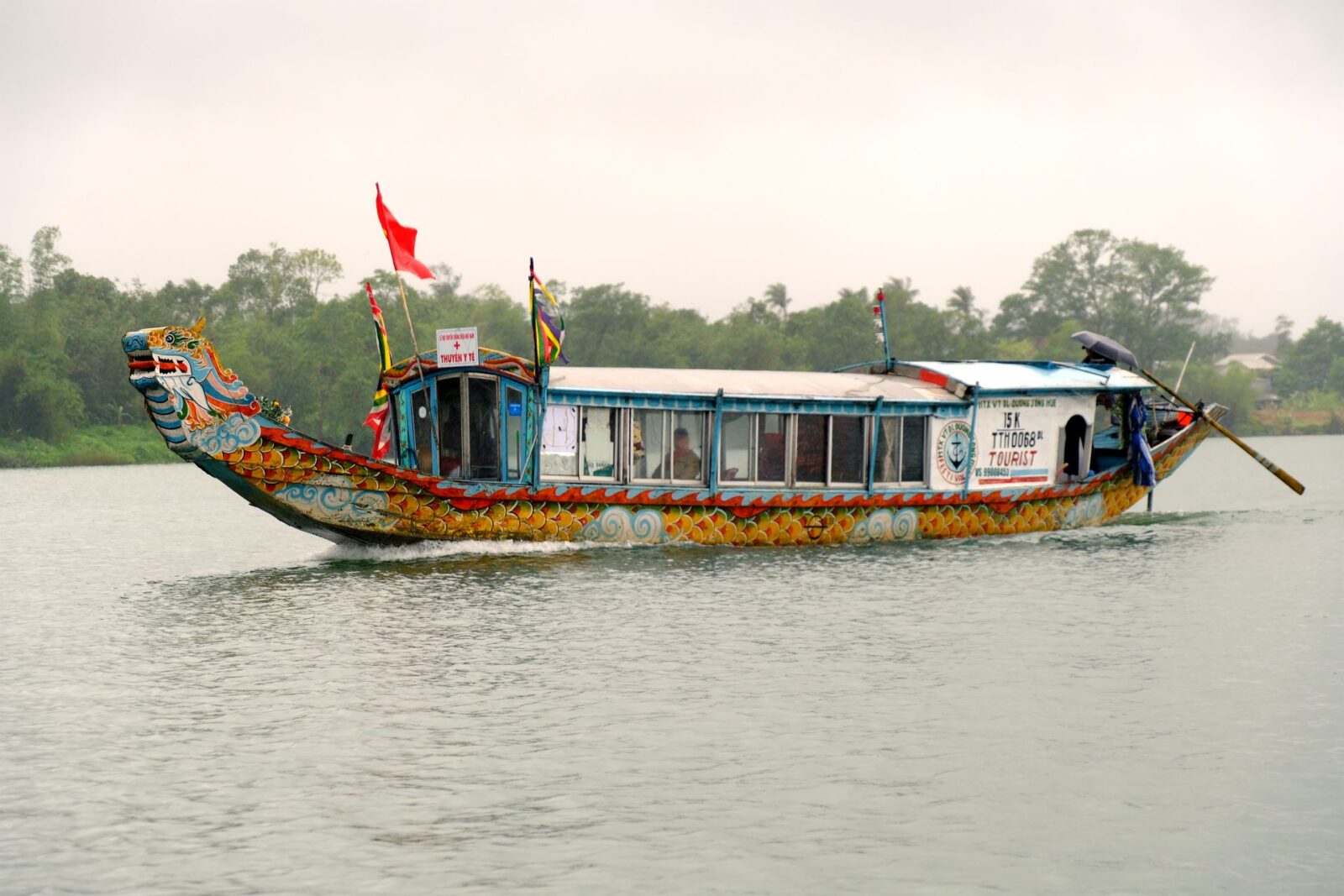
Our first stop in Huế was the Thiên Mụ Pagoda, also known as the Celestial Lady Pagoda, located along the banks of the Perfume River. Even the name of the river felt evocative—suggestive of memory rather than scent.
Perched on a small hill overlooking the water, the seven-storey pagoda is Huế’s most recognisable landmark. Built in the early 17th century, it predates the imperial era that later defined the city. At just over 20 metres tall, it is often cited as the tallest religious structure in Vietnam, though standing there, its presence mattered more than its height.
Beyond its visual prominence, Thiên Mụ has long been woven into Vietnam’s spiritual and political history. The pagoda has been associated with Buddhist activism in the 20th century, particularly during periods of political unrest, when monks here became quiet but powerful voices of conscience. It has never been just a place of worship, but also a witness to change. Behind the pagoda lies a peaceful garden, where bonsai trees, stone pathways, and flowering plants create space for slow wandering. With rain settling softly on tiled roofs and leaves, it felt less like a monument and more like a pause—an enduring presence that has watched centuries pass without needing to explain itself.identity, leaving behind citadels, tombs, and pagodas spread along the riverbanks.
At Thiên Mụ, that layered history feels restrained. There is no spectacle here—just quiet continuity.
Behind the pagoda lies a peaceful garden, where bonsai trees, stone pathways, and flowering plants invite slow wandering. The rain softened everything: sound, colour, even thought. It felt like a place meant for contemplation, not explanation.
Beyond its visual prominence, Thiên Mụ has long been woven into Vietnam’s spiritual and political history. The pagoda has been associated with Buddhist activism in the 20th century, most notably during periods of unrest, when monks here became quiet but powerful voices of conscience. It has never been just a place of worship, but also a witness to change.
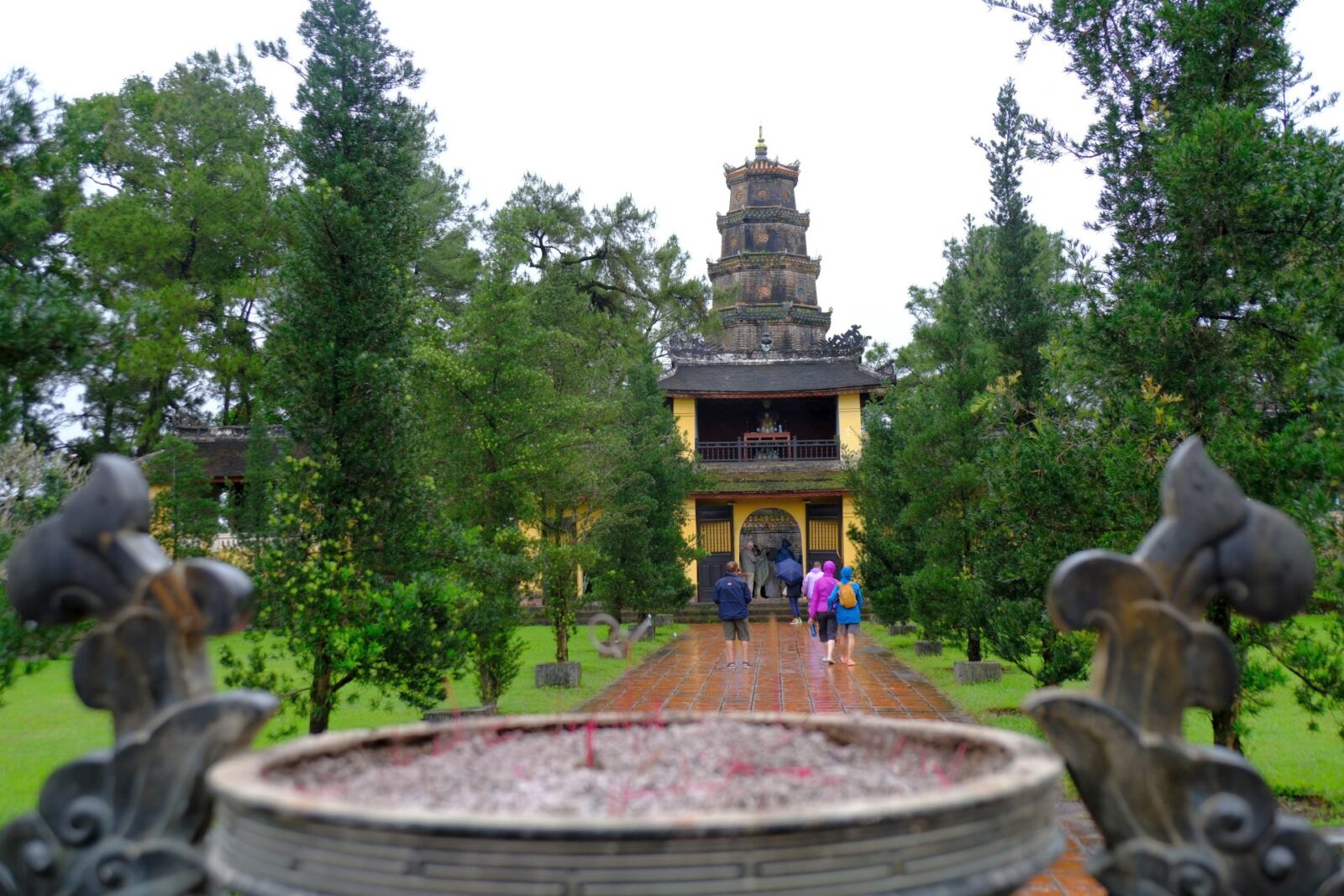
Standing there by the river, with rain settling softly on the tiled roofs, it felt less like a monument and more like a pause—an enduring presence that has seen centuries pass without needing to explain itself.
Inside the Imperial City
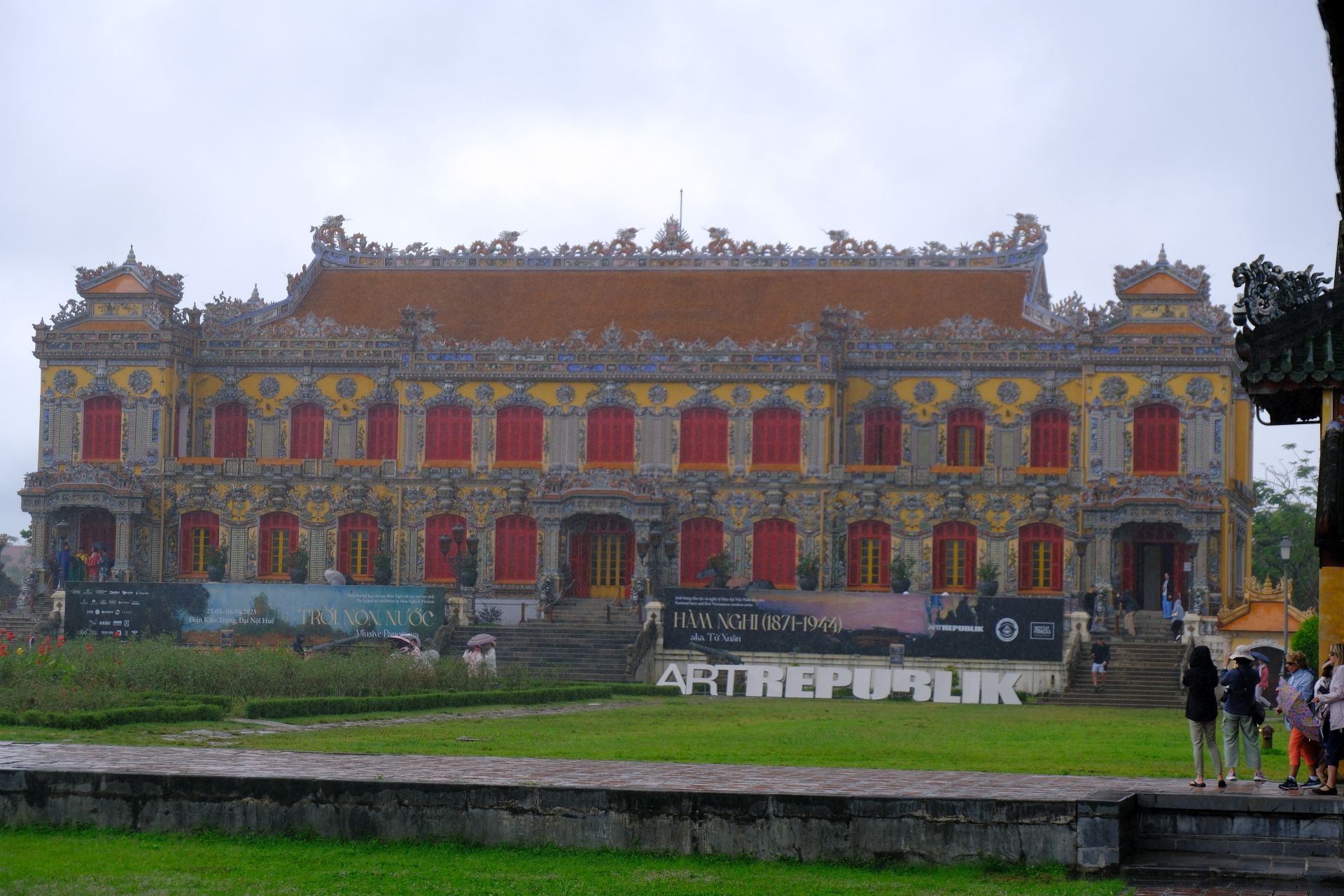
We then visited the Huế Imperial City, the last royal city of Vietnam and once the political and ceremonial heart of the country. Enclosed by moats and thick stone walls, the vast complex was built in the early 19th century under the Nguyễn Dynasty, which ruled Vietnam from 1802 until 1945.
Walking through the citadel, we passed landmarks that once structured imperial life: the Flag Tower, the imposing Ngọ Môn Gate, the Nine Dynastic Urns cast to symbolise the emperors, and the Nine Holy Cannons positioned as protectors of the realm. Inside, the Thái Hòa Palace—where coronations and court ceremonies were held—hinted at the formality and hierarchy that once governed life here. Beyond it lay the Forbidden Purple City (Tử Cấm Thành), reserved exclusively for the emperor and his inner circle.
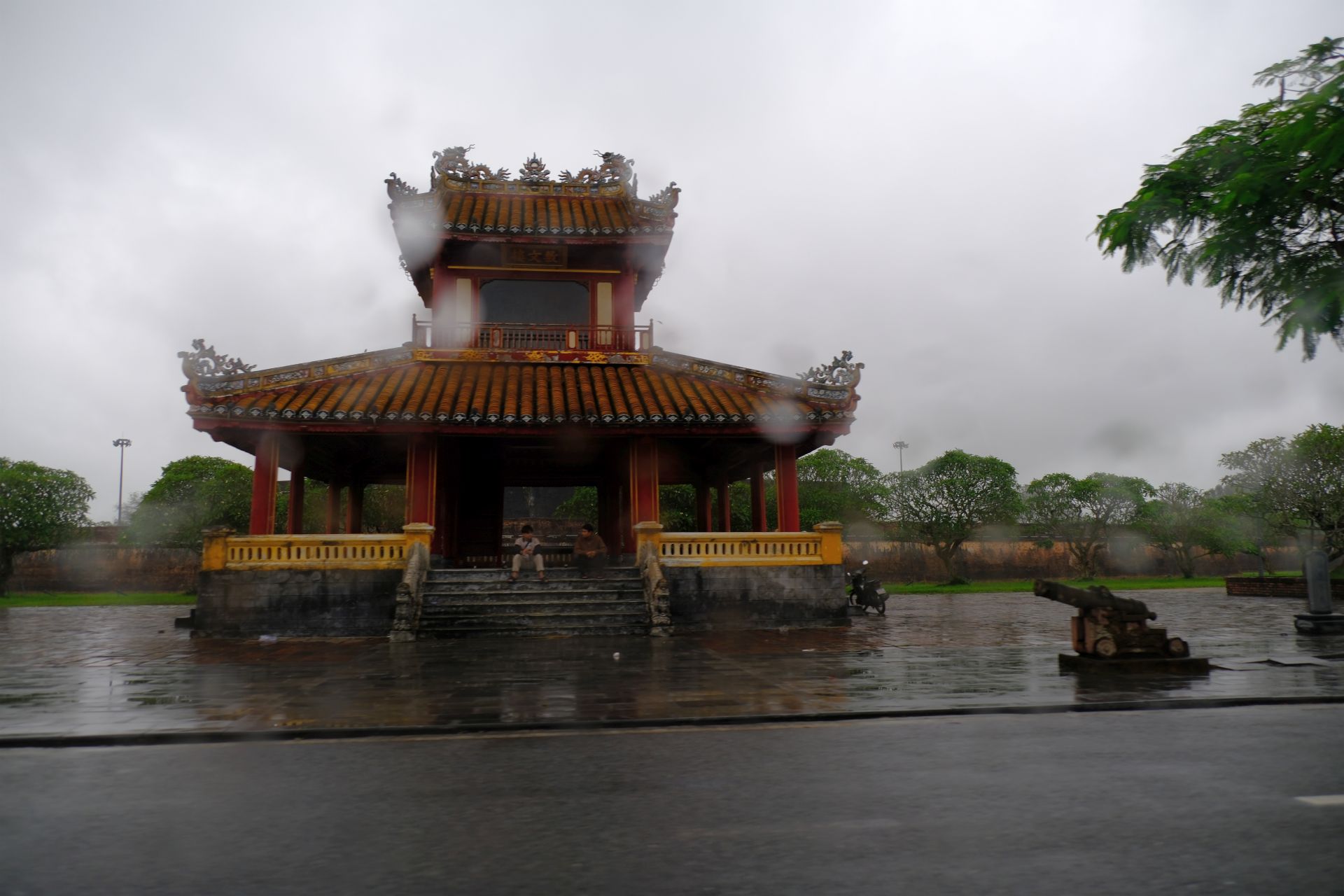
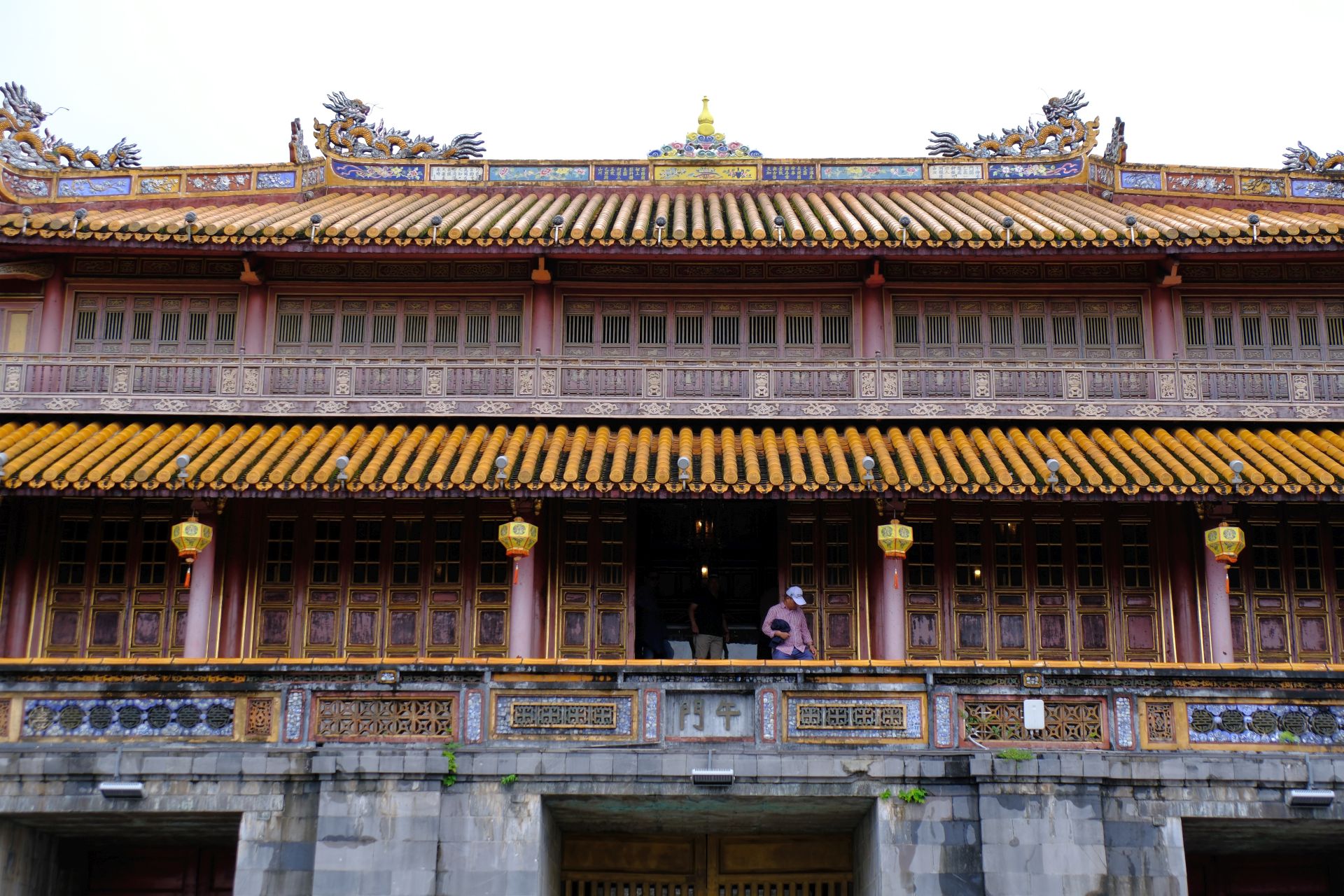
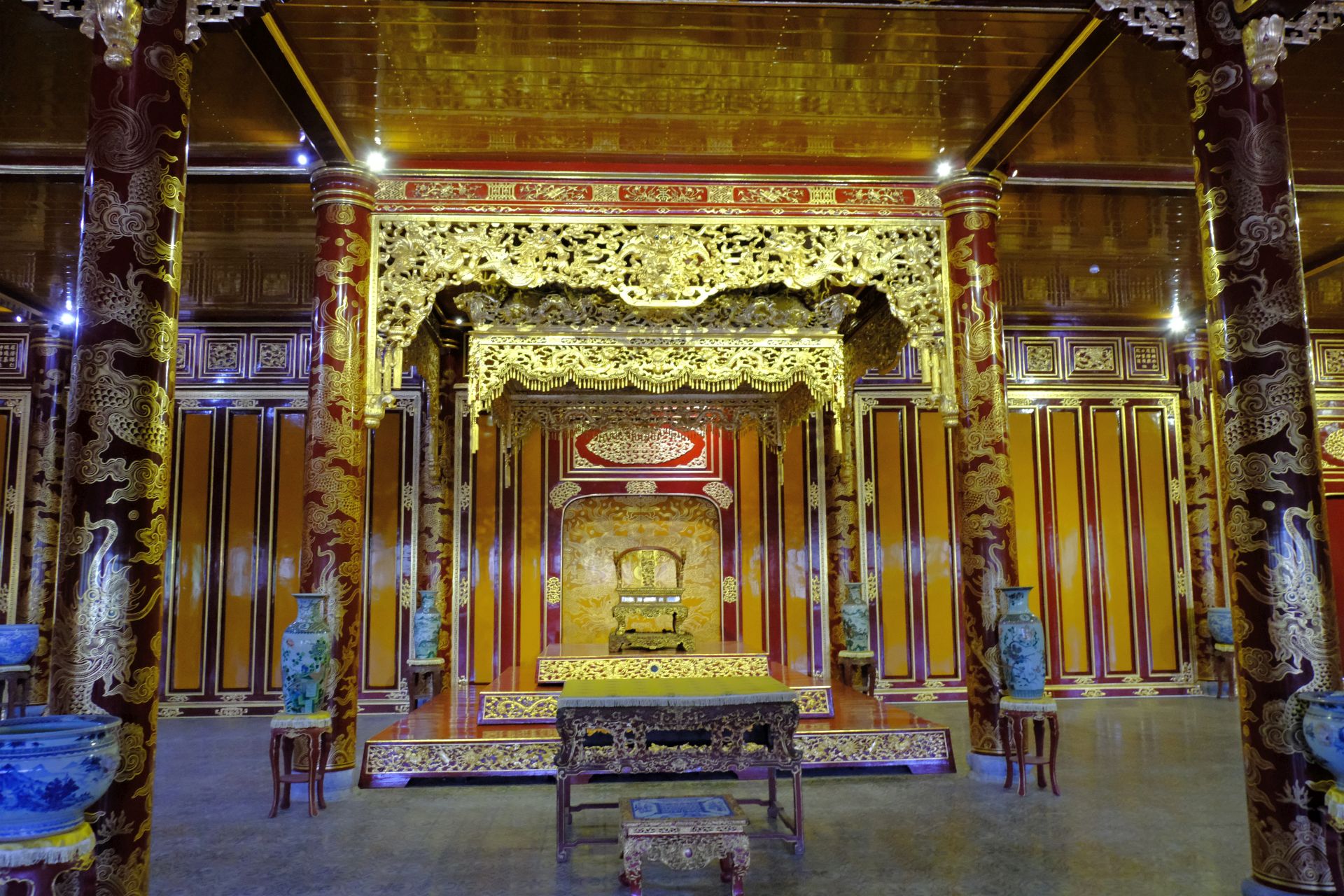
Much of the complex bears the marks of time and conflict. Large sections were damaged during the wars of the 20th century, and today the Imperial City stands somewhere between restoration and ruin. Walking through it, we were aware of its scale and historical weight, even if it didn’t fully draw us in emotionally that day. It felt dignified, composed—and slightly distant.
The weather remained overcast, with intermittent light showers that made walking comfortable and unhurried. Huế revealed itself steadily, without drama. This was a city dense with history, but it asked for patience rather than immediacy.
Not every place meets you where you expect it to. Huế felt like a city that might reveal itself more fully over time—or perhaps on a different kind of visit altogether.
Early evening, we transferred to the airport for our flight to Hanoi.
Leave a Reply