Deciding what to include in Armenia was less about ticking places off and more about working out what would fit together without rushing us. Yerevan and its immediate surrounds were obvious. Beyond that, there were too many possibilities for the time we had — Lake Sevan, Dilijan, Tsaghkadzor, Jermuk, and the long pull south towards Tatev.
Tsaghkadzor was the easiest to drop. Spring isn’t really ski-resort season, and without snow it felt like the wrong fit. Between Jermuk and Dilijan, we chose the latter, and Tatev stayed firmly on the list. That decision shaped the rest of the journey. Tatev is more than four hours from Yerevan, and doing it as a day trip would have meant a very long, tiring loop. Instead, we decided to stay overnight in Goris. It reduced the strain of the drive and, in hindsight, turned out to be one of the better calls we made — even if it meant we had less time than we’d hoped for in Yerevan itself.

Our first major stop heading south was Khor Virap Monastery, around forty kilometres from Yerevan. The drive eased us gently out of the city — vineyards, apricot and peach farms, low rolling fields — with Mount Ararat appearing and disappearing as the road shifted. We passed through Artashat and edged closer to the Turkish border, the landscape opening out into the Ararat Plain.

Khor Virap sits slightly apart from everything else, perched on a small rise, its setting doing as much of the work as the buildings themselves. From here, Ararat feels close enough to dominate the view, even though it lies across the border. The monastery is compact — stone walls, simple domes — and it doesn’t take long to walk around. What lingers is the sense of place rather than the architecture: the openness of the plain, the stillness of the surroundings, and the weight of history quietly embedded in the site. Saint Gregory’s imprisonment here is well known, but it’s not something that demands attention while you’re there; the landscape seems to carry the story without explanation.
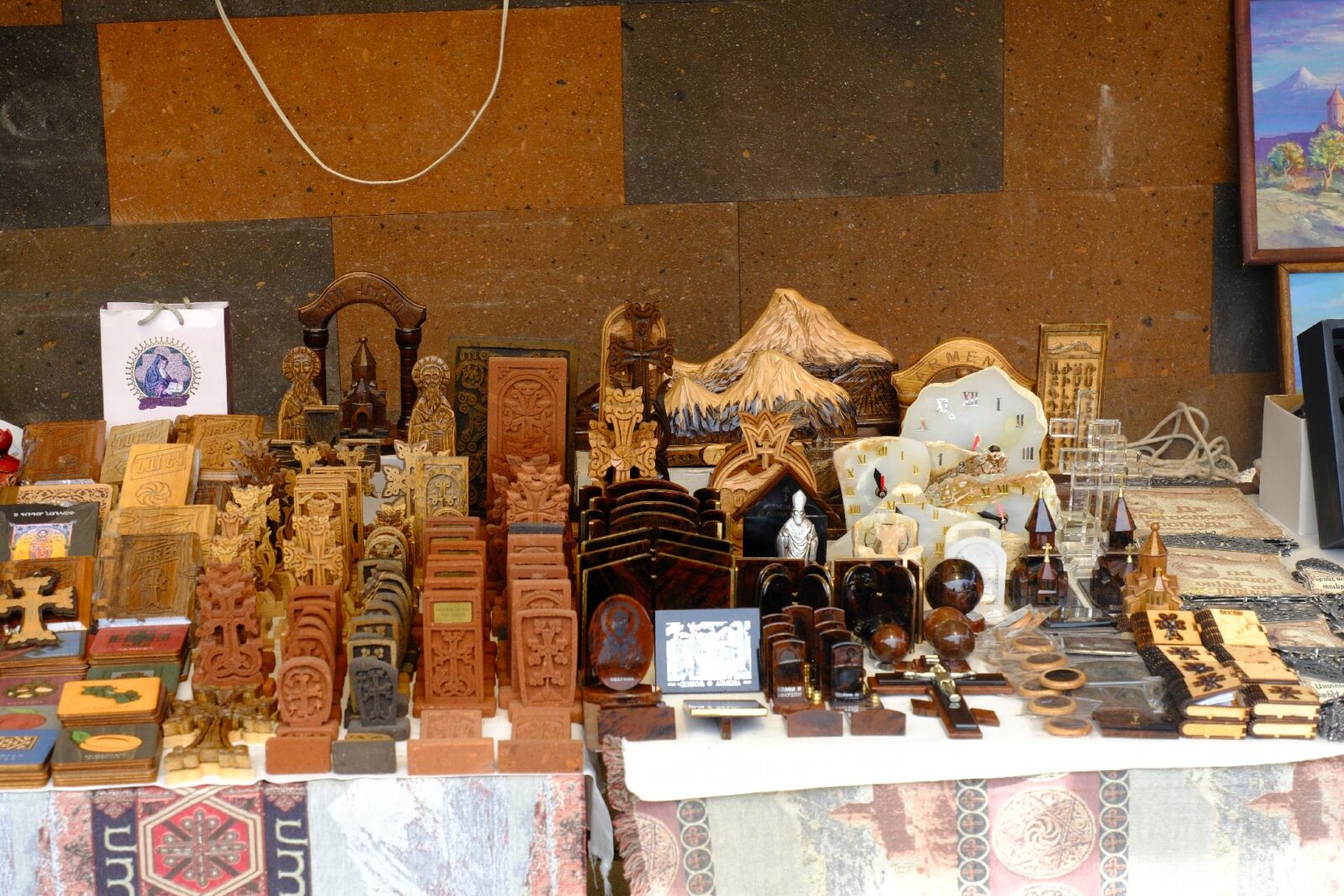
Further south, we stopped at Areni-1 Cave, near the village of Areni. The cave itself is unassuming from the outside, but its significance lies deep within. Discovered accidentally during construction work in the early 2000s, it has revealed layers of human occupation stretching back thousands of years. Standing at the entrance, it’s hard to reconcile the quiet, slightly dusty site with the idea that this was once a place of daily life — of rituals, burials, and even early winemaking.
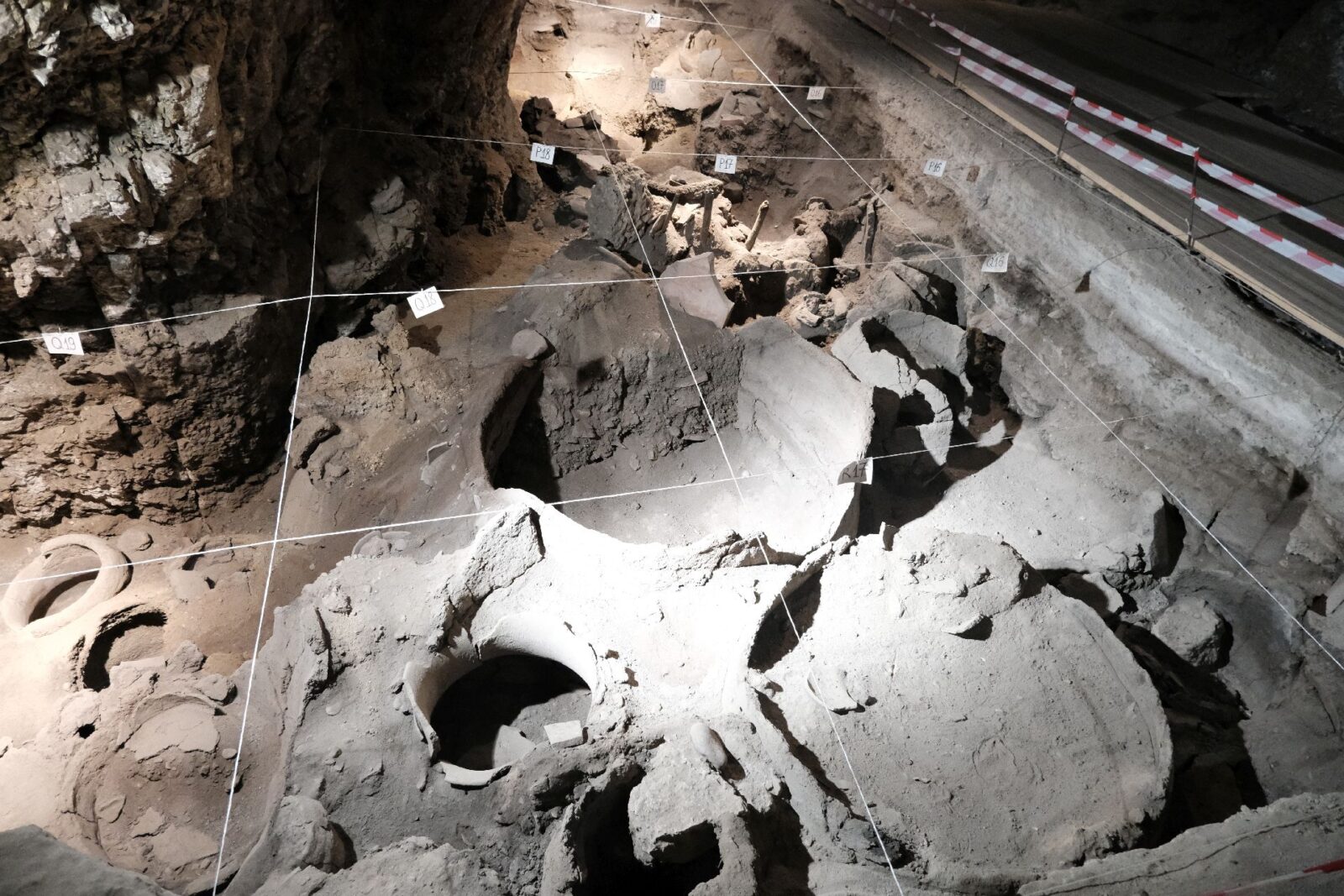
Some of the finds here are extraordinary — evidence of wine production from around six thousand years ago, burials with personal objects, and even a remarkably well-preserved leather shoe. But these facts sit best as afterthoughts. What stayed with me was the sense of continuity: that this small cave in a remote valley had been part of human life long before borders, roads, or itineraries existed.
From Areni, the road winds through the Amaghu Valley towards Noravank Monastery. The approach is slow and deliberate, hemmed in by red rock cliffs that narrow and then open out just as the monastery comes into view. Noravank feels carefully placed rather than imposed — its pale stone set against the deep tones of the surrounding rock.

Built in the thirteenth century under the Orbelian dynasty, the monastery complex is small but finely detailed. The carvings on the church façades reward a closer look, but there’s no sense of grandeur for its own sake. Noravank once served as a centre of learning and manuscript production, and perhaps that history explains its measured, almost inward-looking presence. It’s a place that encourages you to linger briefly, look carefully, and then move on without fuss.

By the time we left Noravank behind, the day had begun to stretch. From here, it was another long drive — around 135 kilometres — to Goris, in Armenia’s southeast. Goris sits in a valley ringed by the Zangezur Mountains, at about 1,400 metres above sea level, and arrives quietly after the drama of the road. Our stay was short, but distinct. There was something about stopping here — unhurried, away from the main tourist circuit — that made the journey south feel properly broken, rather than endured. In a trip shaped by distances, Goris offered pause without asking for attention.

Leave a Reply